
Rise and Shine
“Rise and Shine addresses the disastrous effect such industrial projects have on human culture, displacing entire populations and literally washing away layers of history.”
Leonard Ursachi fled his native Romania—then a dictatorship—in 1980, and was granted political asylum in France. Labeled “an enemy of the people” for defecting, he could not return to his homeland for nearly a decade. Through his art, he maps the exile’s miasma of displacement and loss onto physical objects—sculptures, photographs, drawings—as both an act of resistance and a talismanic vision of homecoming. Water is an important element, both physical or metaphoric, in much of his work.
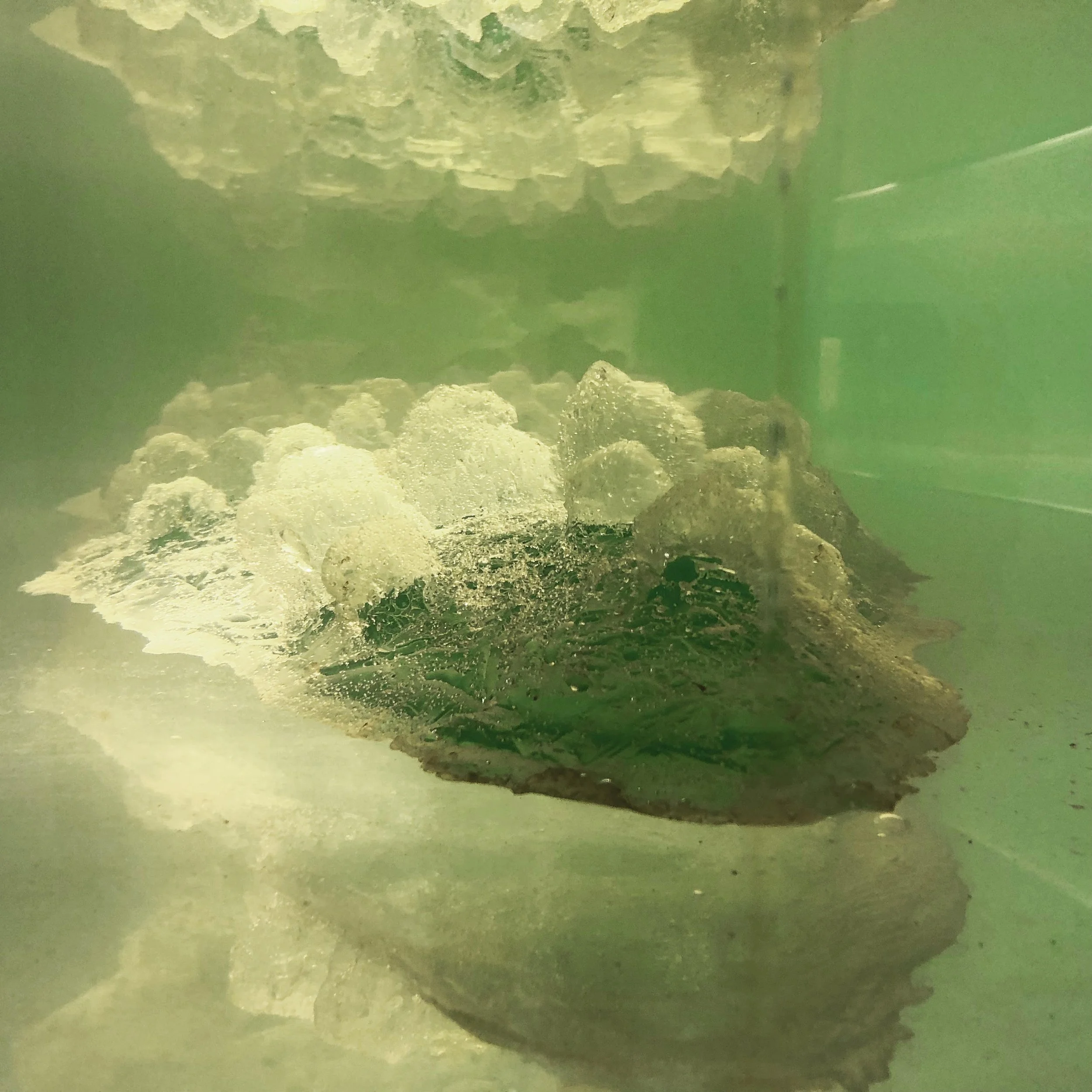
The central element of Rise and Shine is a transparent oval vessel on a rusted steel base. Inside the vessel are water and a resin model of the island Ada-Kaleh. Lit from below, the island is alternately drowned and resuscitated as water repeatedly rises and falls. On the gallery walls are several works made or collected by Ursachi that also speak to estrangement, loss, and reclamation.
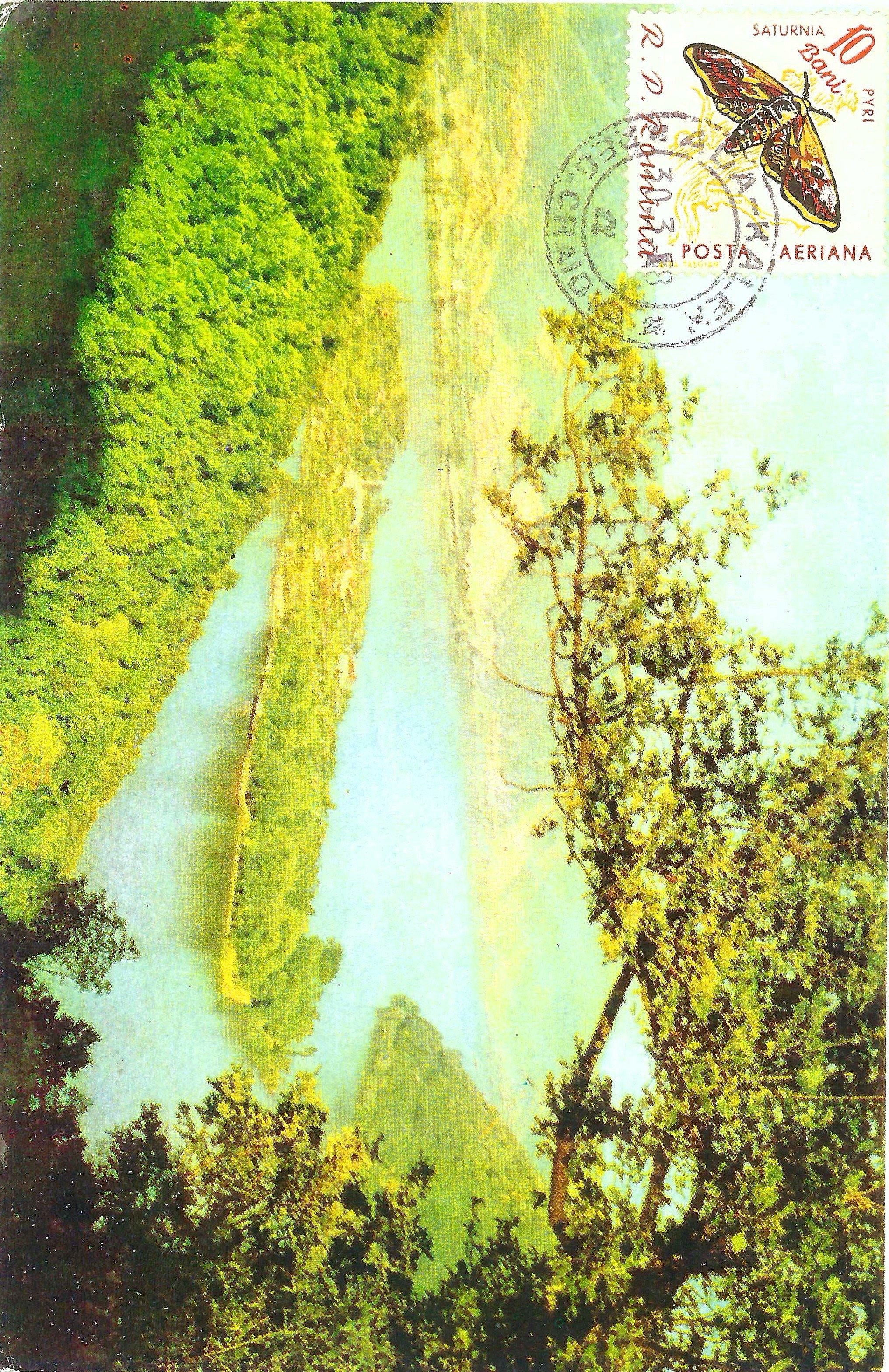
Ada-Kaleh, a small island in the Danube River, was submerged by Romania and Yugoslavia’s autocratic governments to make way for two dams and hydro-electric plants. In contrast to the grayness that muffled the rest of Romania, Ada-Kaleh, home to a Muslim community that traced its roots to the Ottoman Empire, was an explosion of color and noise. Everything was slightly miniaturized, to suit the island’s scale—the market where turbaned vendors sold olives, pastries, and jewelry, the ancient fortifications, the mosque, and the narrow, winding alleys.
Before the island was razed and dynamited, the graves of generations of its inhabitants were dug up and reburied in a mass, jumbled grave on Simian Island; its living inhabitants were forcibly displaced. A plan to recreate Ada-Kaleh on Simian never materialized. The drowning of the island did not bring about the promised prosperity to islanders, but rather marked the intensifying of the Romanian regime’s systematic razing of architecture and intolerance of difference.
Ursachi visited Ada-Kaleh as child, and, as a young adult, after the island had disappeared, he returned to that site on the Danube to attempt—unsuccessfully—to escape Romania by swimming to Yugoslavia. He created Rise and Shine in 2010. Now, as the Danube evaporates and intolerance escalates, he and O’Leary have decided to revisit and expand on the work’s themes in this show.
About the curator
Emily O’Leary is a Bronx-based writer, copy editor, curator, and art historian. She earned a dual degree in art history and English literature from SUNY Purchase College after completing a curatorial fellowship at the Neuberger Museum of Art in 2006. She has organized over 25 exhibitions of modern and contemporary art in her role as senior curator at the Derfner Museum in the northwest Bronx, including Leonard Ursachi: Bunkers (2011) and Erosion: Works by Leonard Ursachi (2017), as well as group shows of contemporary Central and Eastern European artists whose work ruminates on identity, cultural belonging, shifting borders, and global and environmental tensions. In her independent practice, she is the copy editor for the photography magazine, Nueva Luz, and a Pushcart Prize-nominated poet.
About the artist
Leonard Ursachi is a Romanian-born American artist and the founder of Canton Projects. He grew up in a dictatorship, from which he defected, and spent years border-hopping before settling in New York. France granted him political asylum and a scholarship to study art history and archeology at the Sorbonne. Ursachi’s art reflects our contemporary world of porous borders, vulnerable shelters, and mutating identities. Leitmotifs throughout his work are lost or buried histories, the repercussions of environmental choices, and the impact of borders on cultures and individuals.
Ursachi has exhibited internationally, including a solo show in 2008 at Romania’s National Museum of Contemporary Art in Bucharest. Elisabeth Sussman, curator at the Whitney Museum of American Art, has described Ursachi’s work as “thought provoking and quite moving … dealing with an important aspect of our culture and … both sensitive and intelligent.”
He is the founder of Canton Projects.