
Not our
An installation by Jane Dodds
Works in clay, cardboard and mycelium
Exhibition design: Scott Guerin Planning + Design January 8, 2026 - February 7, 2026
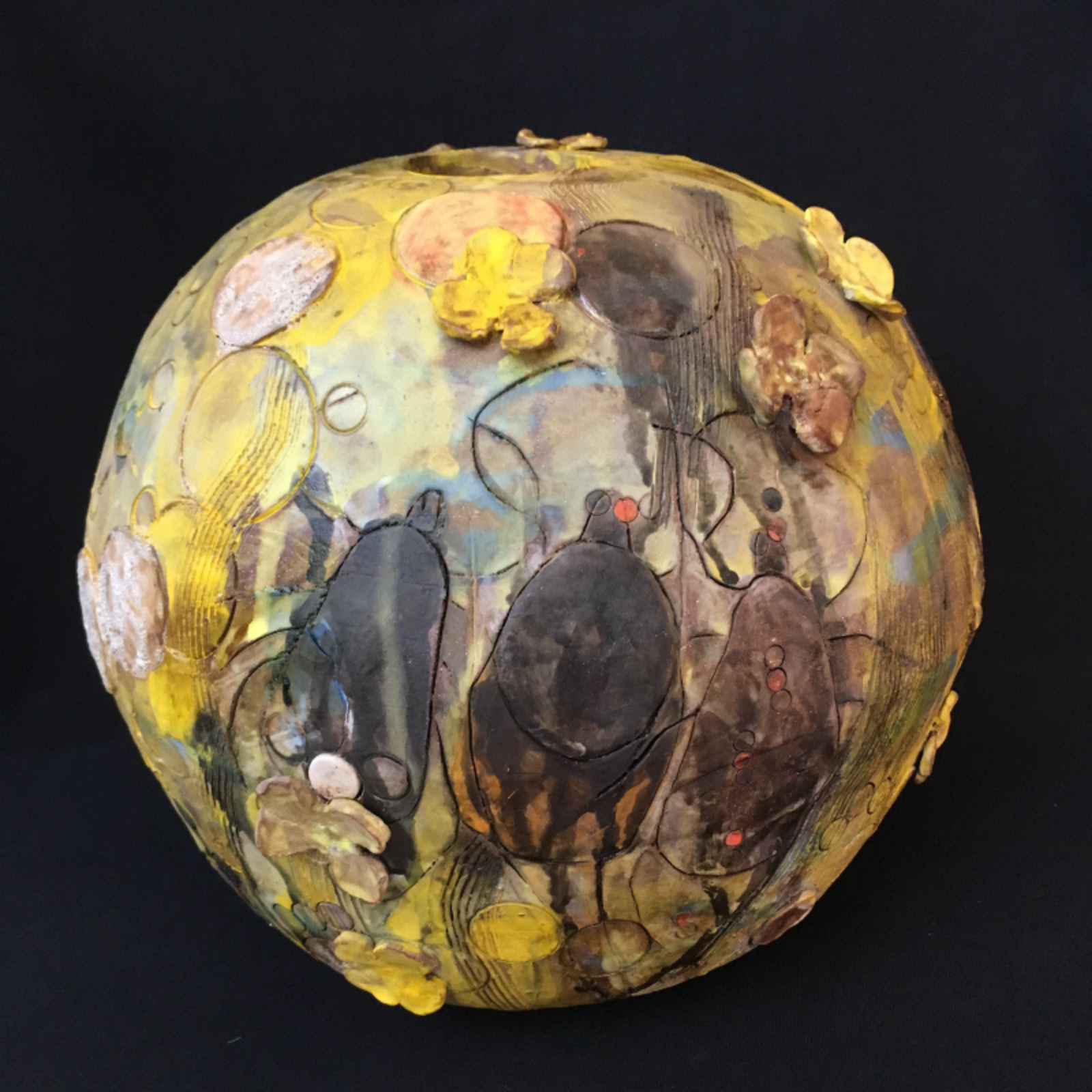
414.83 ppm CO2 avg. May 2019. 2019. Stoneware.
11" high x 12” diameter
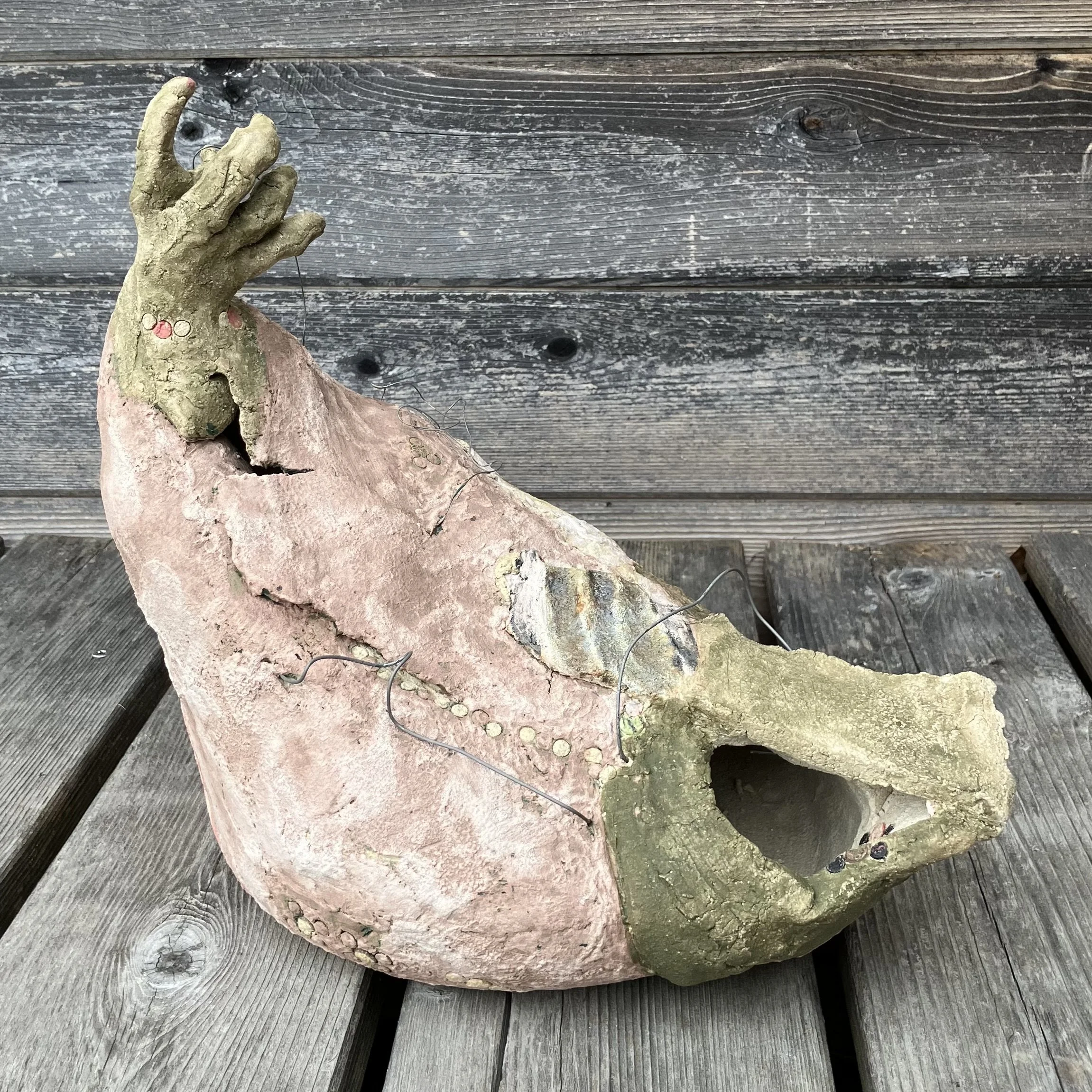
Deer ticks, rendered in this piece along with native wood poppies, cause Lyme disease, and are more plentiful because of milder winters due to climate change.
Jane Dodds made the works in Not our over the last nine years to bring attention to the “cry of the Earth.” That cry is, in effect, a call for change in the face of damages to the Earth’s systems caused by escalating increases in carbon emissions and other human-driven activities.
Not our makes visible a shift in perspective from ownership and right to exploit the natural world, to the recognition that people are part of nature, and our harms to Earth can threaten human existence–and all other life.
Dodds’ latest works explore the use of mycelium, a fungus-derived alternative to petroleum-based plastics and environmentally-unfriendly building and packaging materials. Mycelium is biodegradable and can be grown from “waste materials” such as coffee grounds and sawdust.
The Globes
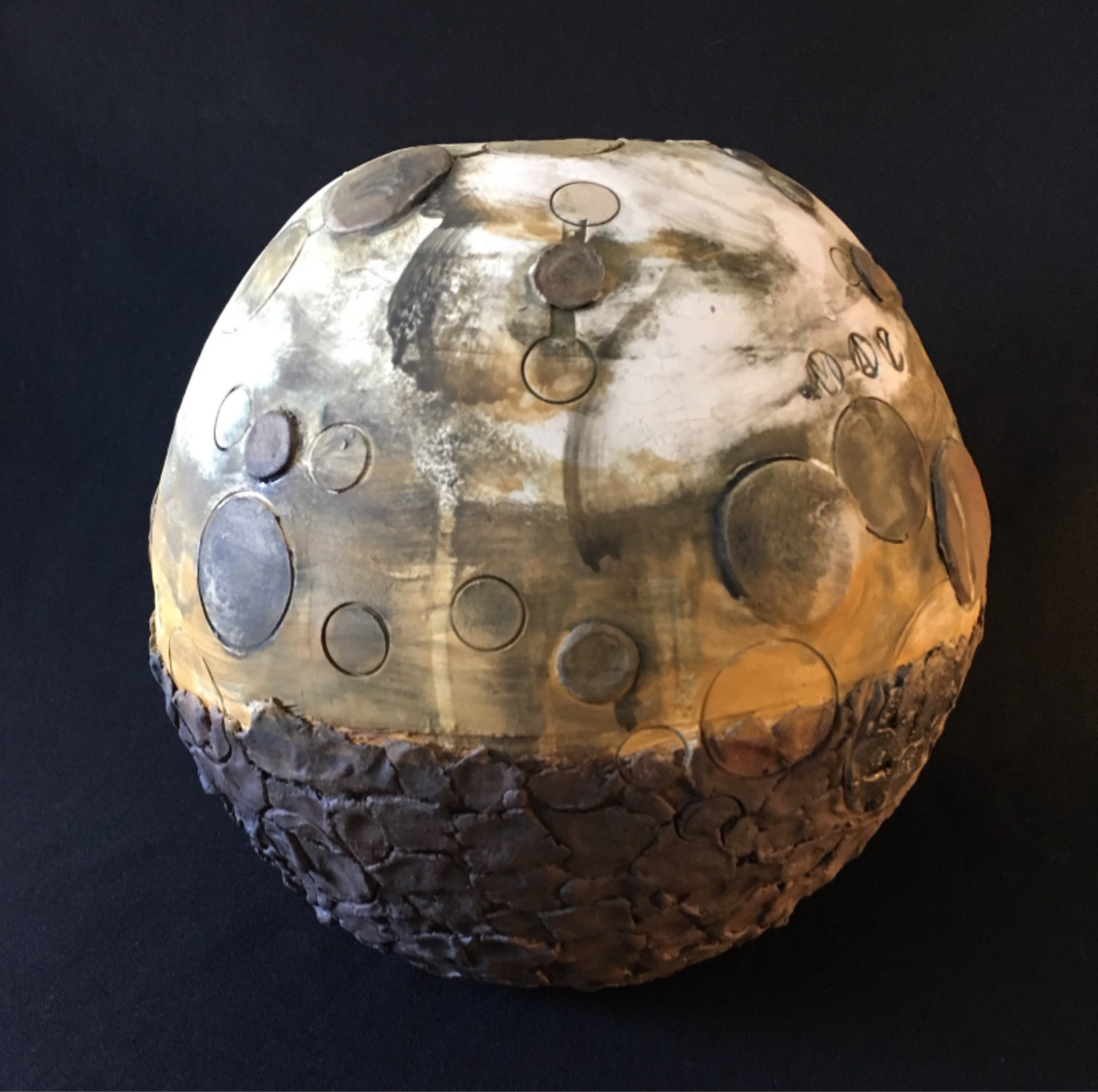
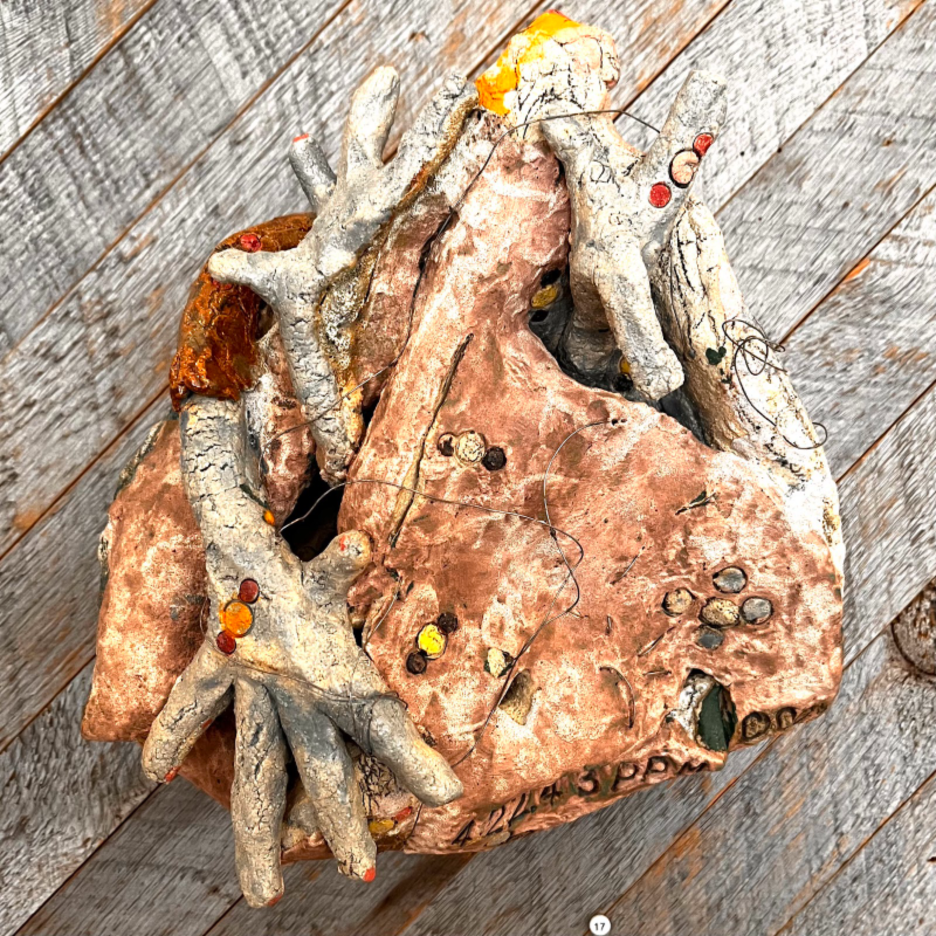
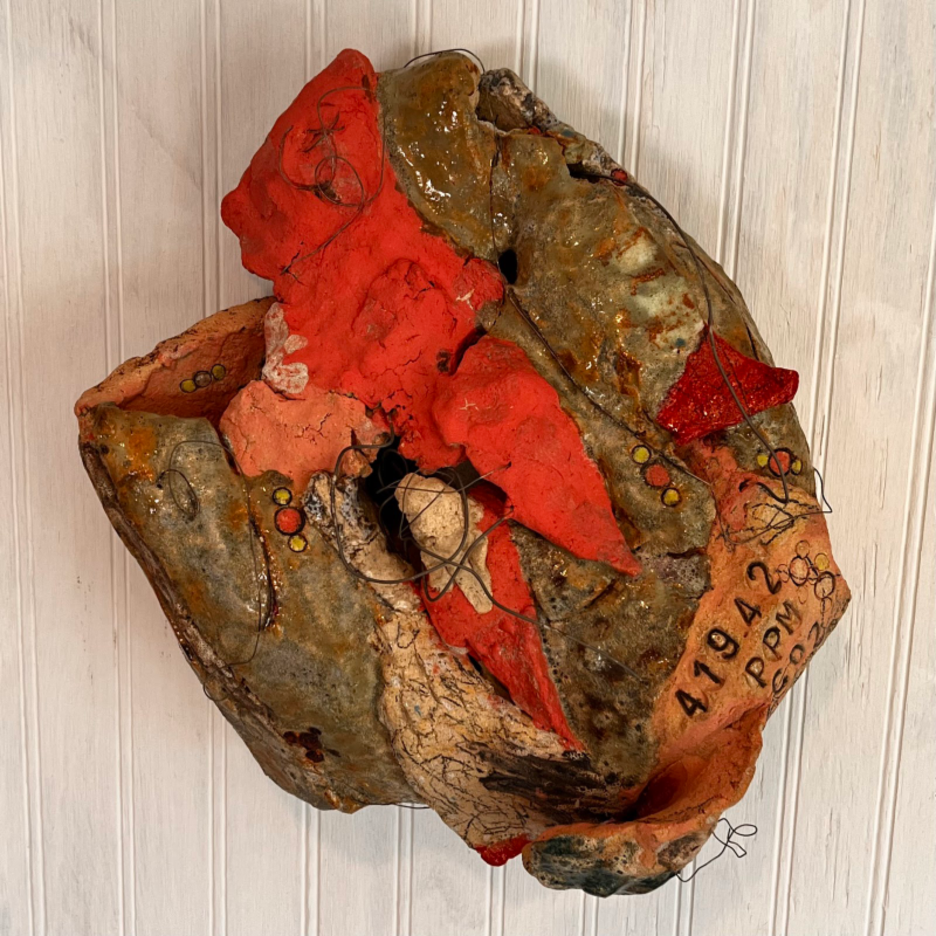
The greenhouse gas CO2 is the most powerful driver of climate change. The ceramic globes in Not our each bear a specific month’s mean global CO2 level, made available by the National Oceanic and Atmospheric Administration’s Mauna Loa Observatory in Hawaii.. Read together, they show a continuous rise from 2017 to 2025. Given that the oldest known fired clay objects are some 30,0000 years old, Dodds imagines these globes as durable analog records that may help future life interpret what happened, if a massive extinction event occurs.
Right: 409.65 ppm CO2 avg. May 2017. 2017. White and red stoneware. 10" high x 10" diameter
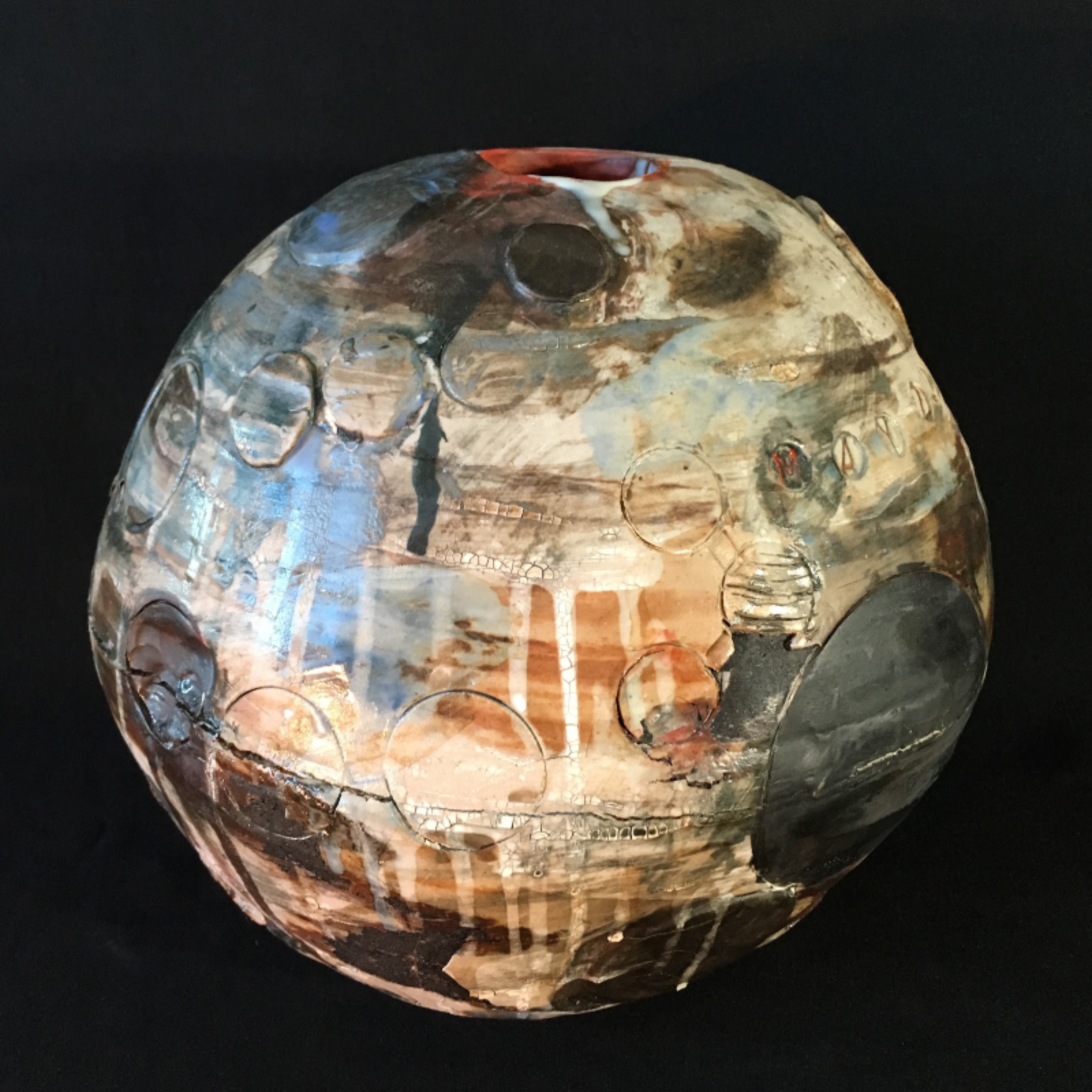
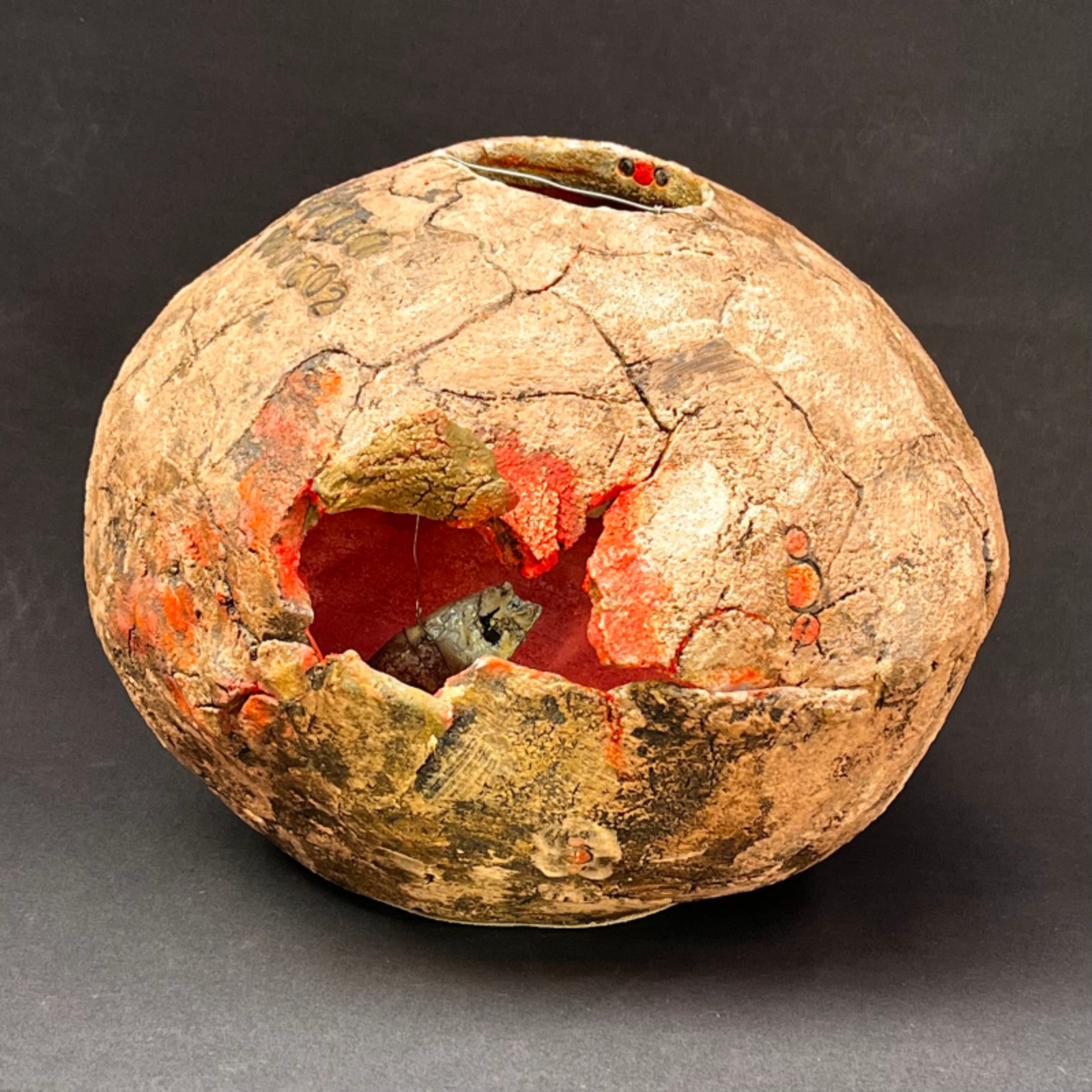
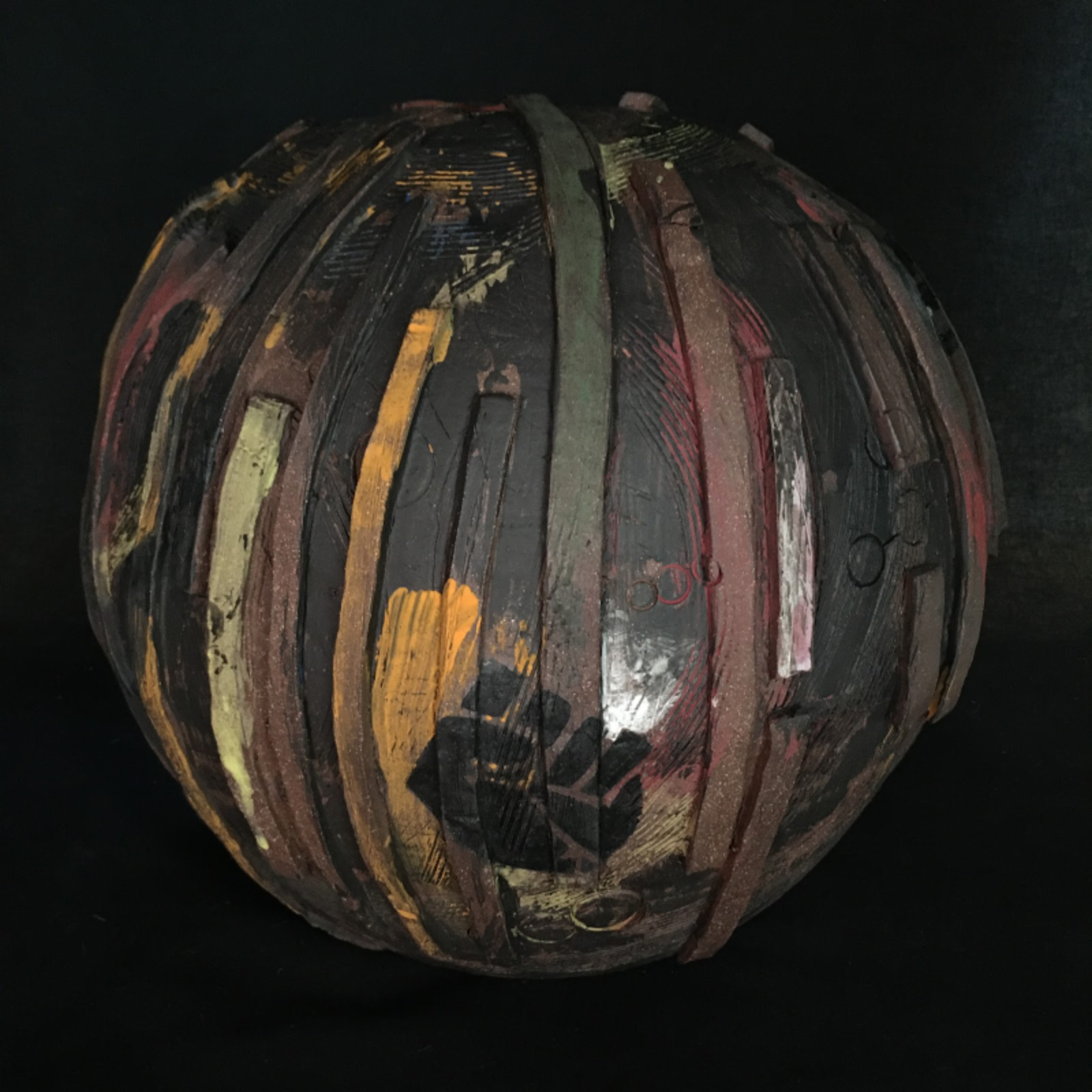
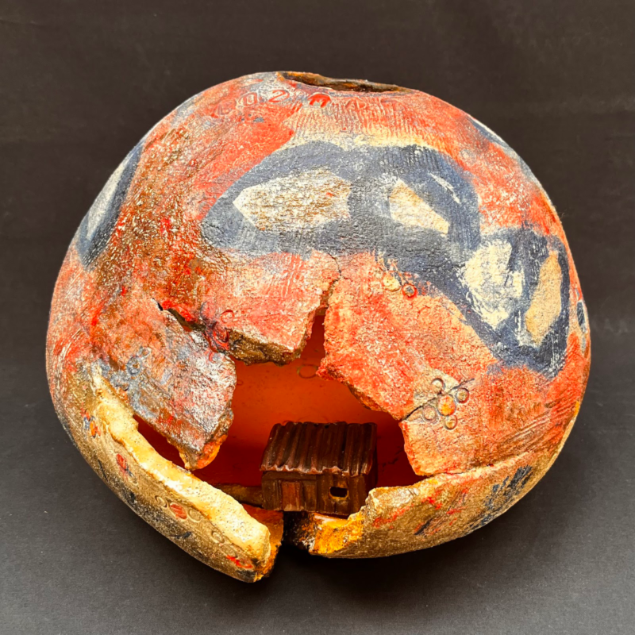
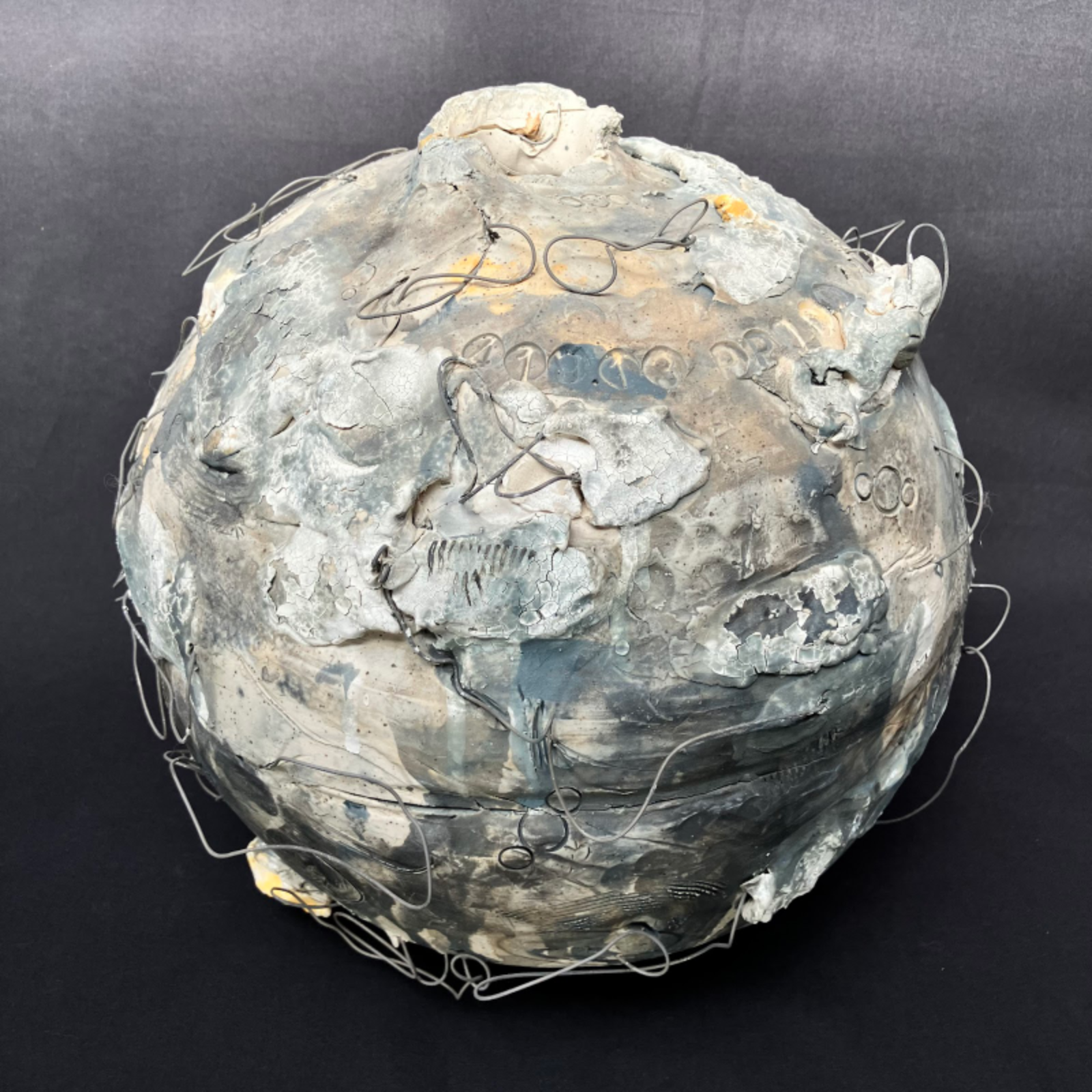
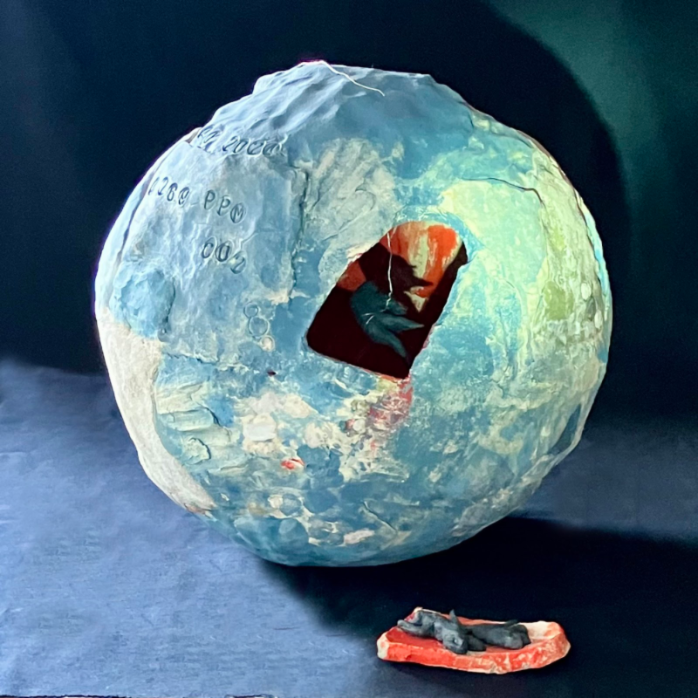
420.97 ppm CO2 avg. May 2022. 2022. Sculpture clay, wire. 10" high x 11.5" diameter. Says Dodds, “There are ‘dead fish” inside this globe. Climate change warms freshwater habitats, reducing dissolved oxygen. This causes bodies of water to dry out and become unlivable.” | 424.00 ppm CO2 avg. May 2023. 2023. Sculpture clay, red stoneware. 10” high x 12.5" diameter. Says the artist, “Inside this globe is a the cabin of an eremite, or hermit. E.O. Wilson predicted that the Anthropocene will be replaced by what he named the Eremocene (the Age of Loneliness) — an era of extreme biodiversity loss in which humans, having destroyed most species, will be alone on the planet with only the domesticated animals that they eat.” | 426.9 ppm CO2 avg. May 2024 2025. Sculpture clay, wire. 13” high x 15” diameter. Dodds explains the clay monkeys in the work: “In 2024, heat-stricken and dehydrated howler monkeys were dropping from trees in Mexico as temperatures rose to over 113° F.”
411.31 ppm CO2 avg. May 2018. 2018. White stoneware. 11" high x 12" diameter. | 417.07 ppm CO2 avg. May 2020. 2020. Red stoneware. 12” high x 10.5" diameter. According to Dodds, the Black Lives Matter Movement that followed the murder of George Floyd in May 2020 advocates for climate change justice as well as racial justice because they are deeply intertwined. | 419.13 ppm CO2 avg. May 2021. 2021. White stoneware, nichrome wire. 12” high x 12” diameter.
Fauna
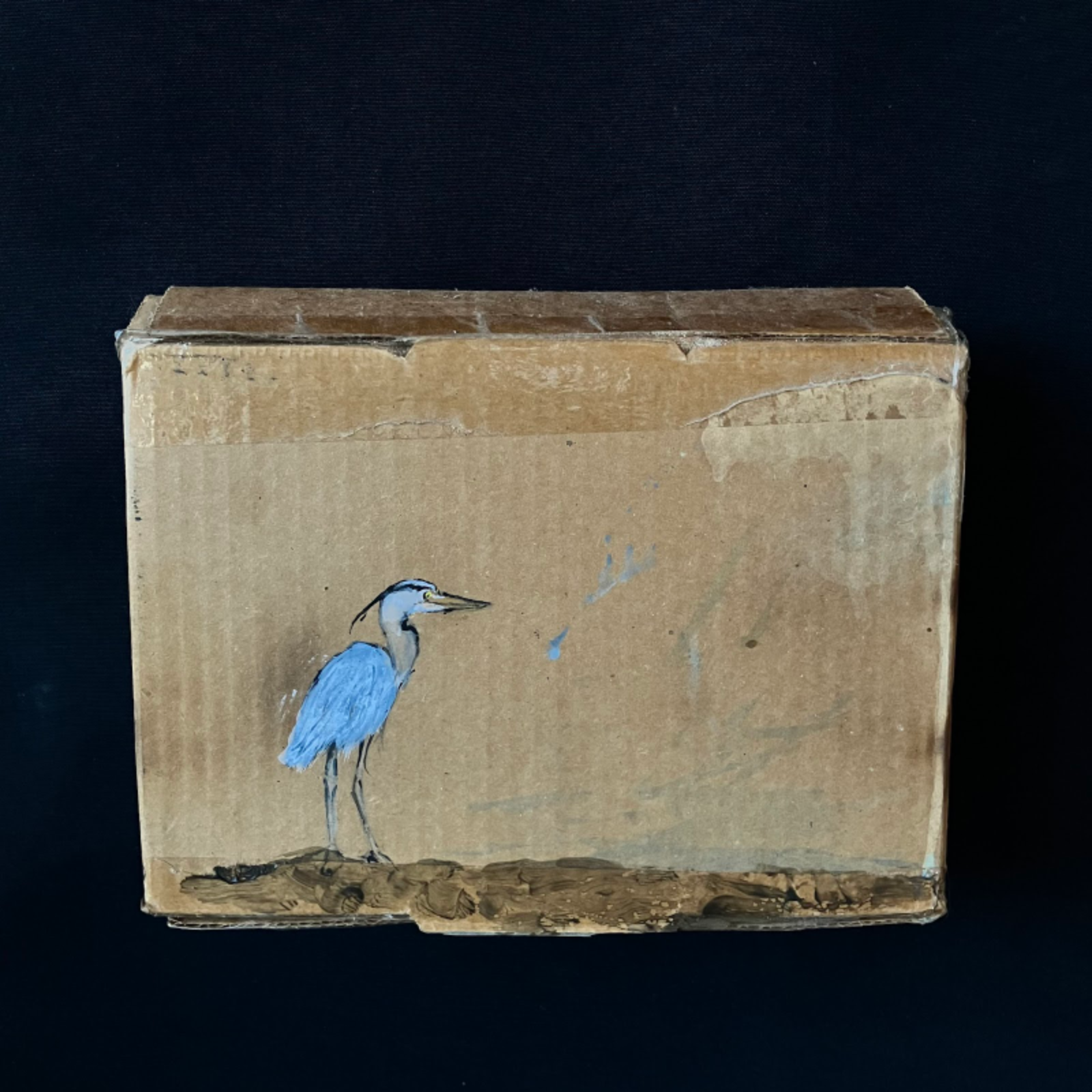
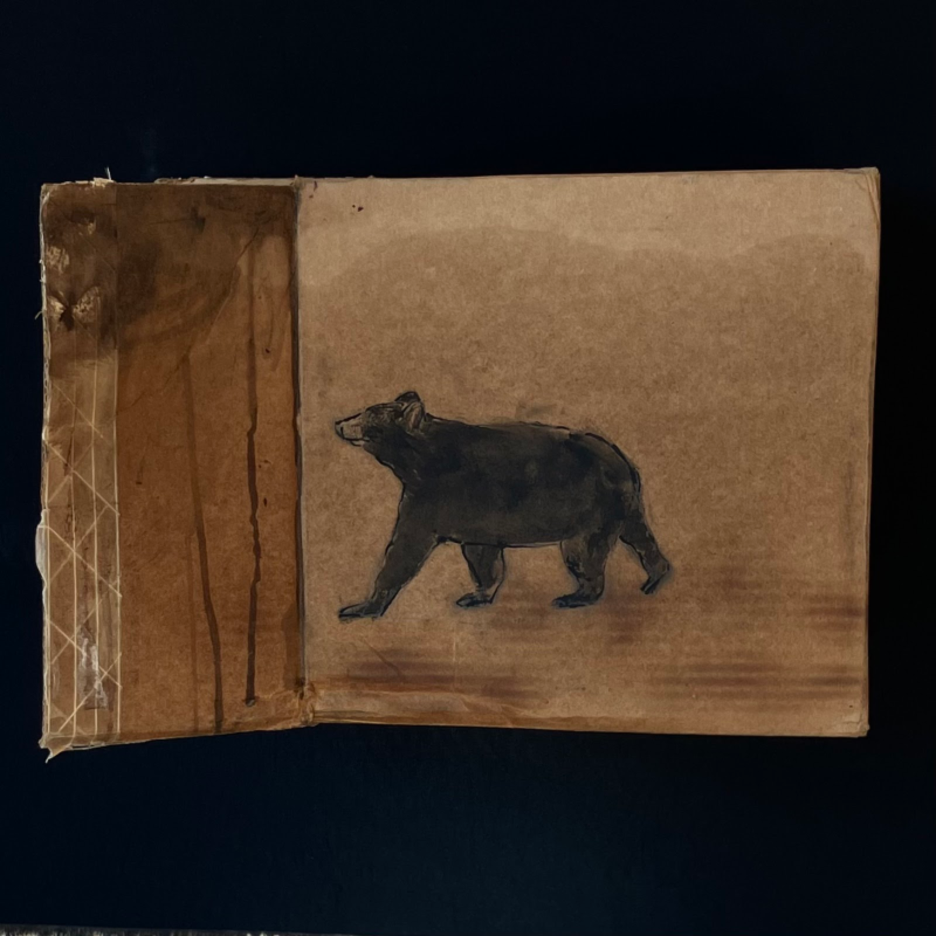
The exhibition includes drawings on heat-scorched cardboard boxes of fauna common in the Northeast. Belonging to Dodds’ “Half Earth” series, they are inspired by E.O.Wilson’s theory calling for the return of half of Earth’s land and seas to nature in order to restore the planet’s systems and preserve remaining wild places. Dodds has let half the land on which she lives upstate revert to its more natural state; the animals on the boxes are ones she has seen or photographed with a trail cam. She chose cardboard for the project because it is as fragile as disappearing wildlife habitats, and as life itself.
Right: Great Blue Heron. 2024. Acrylic paint, bleach, olive oil, scorching on cardboard box. 7.25” high x 9” wide x 3” deep
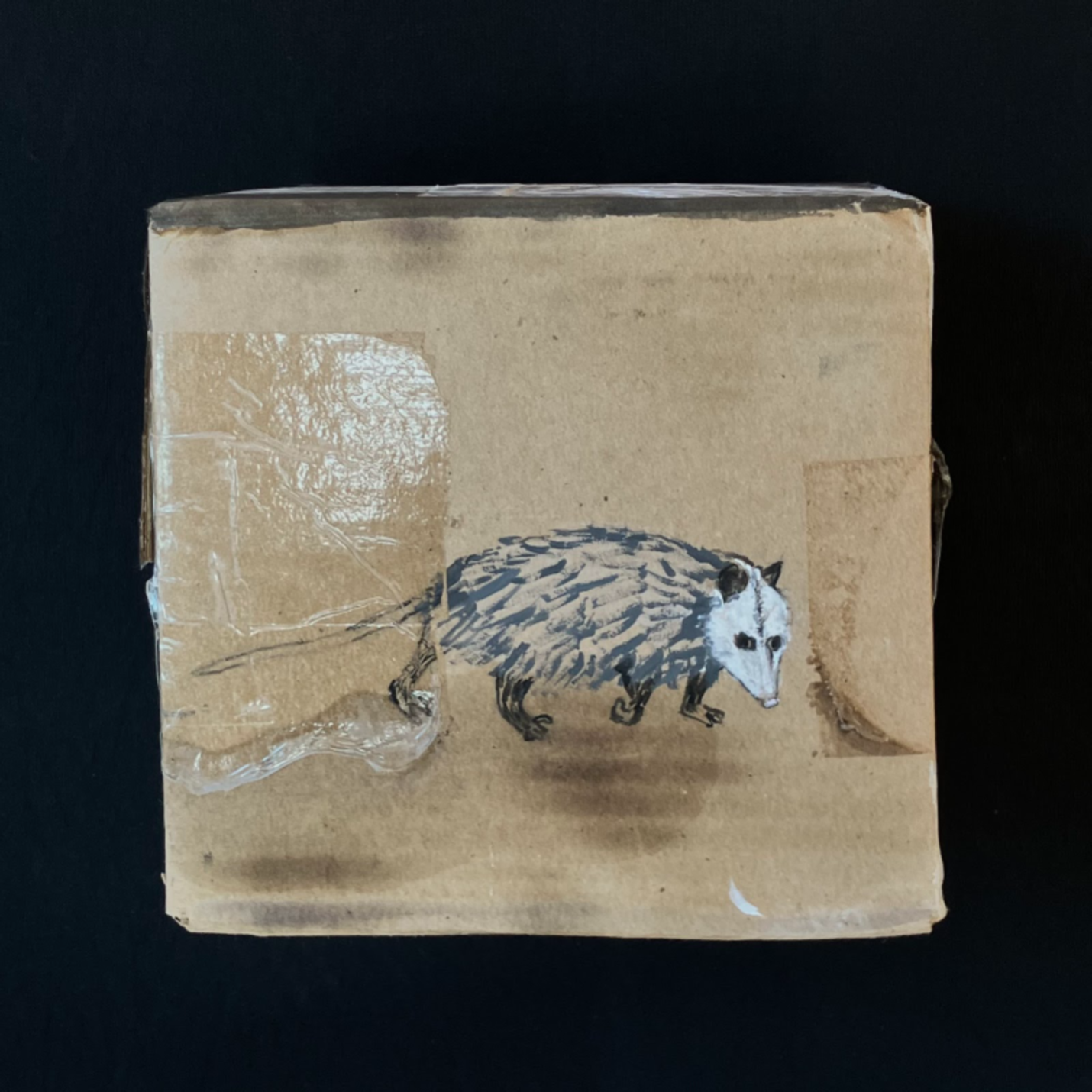
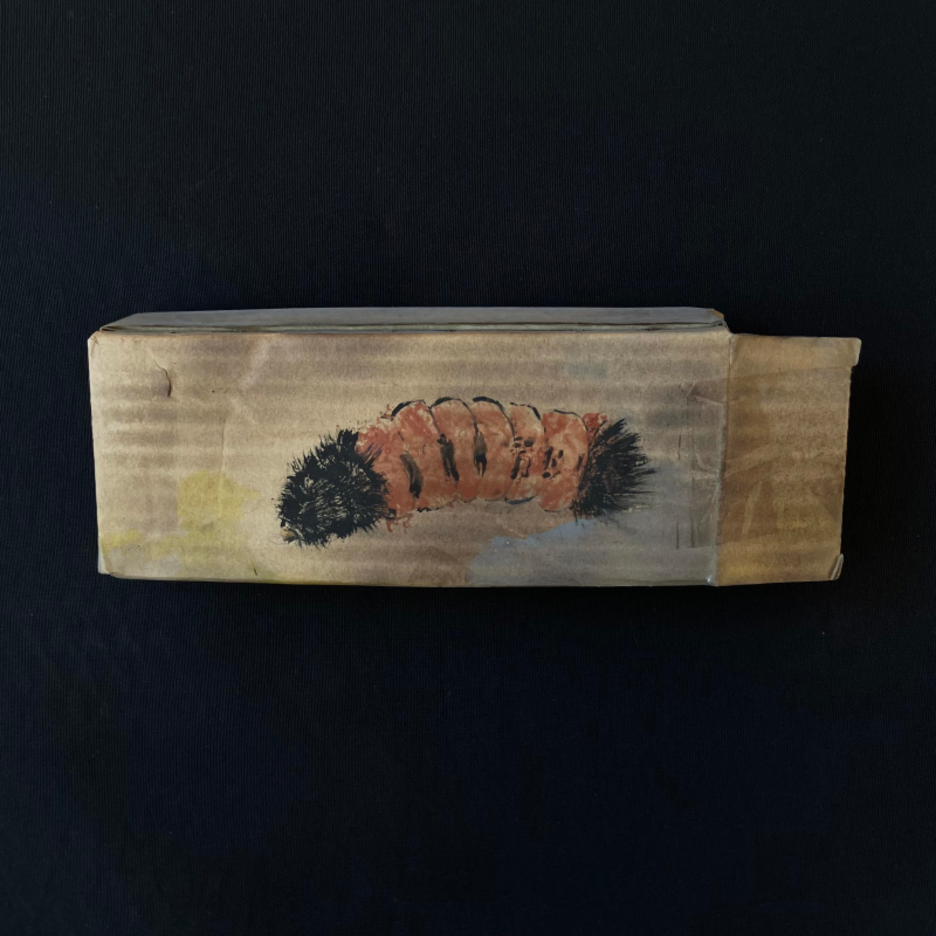
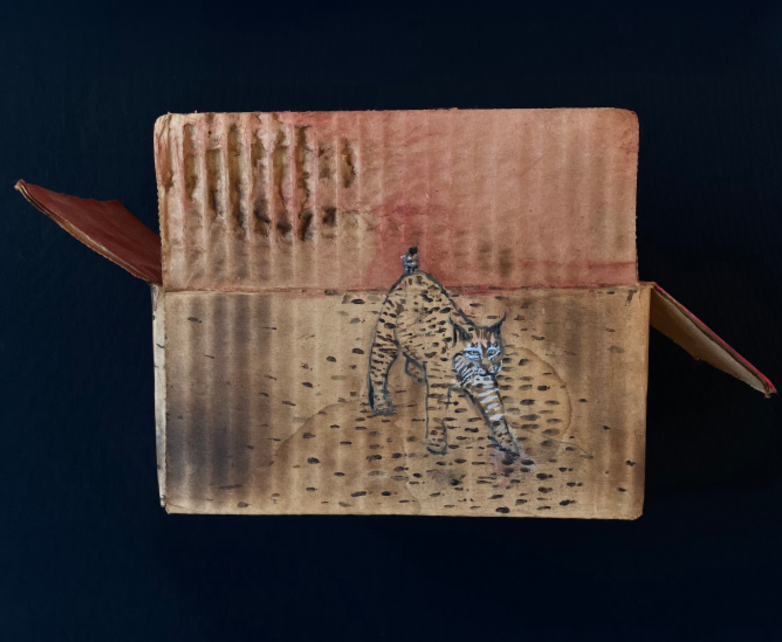
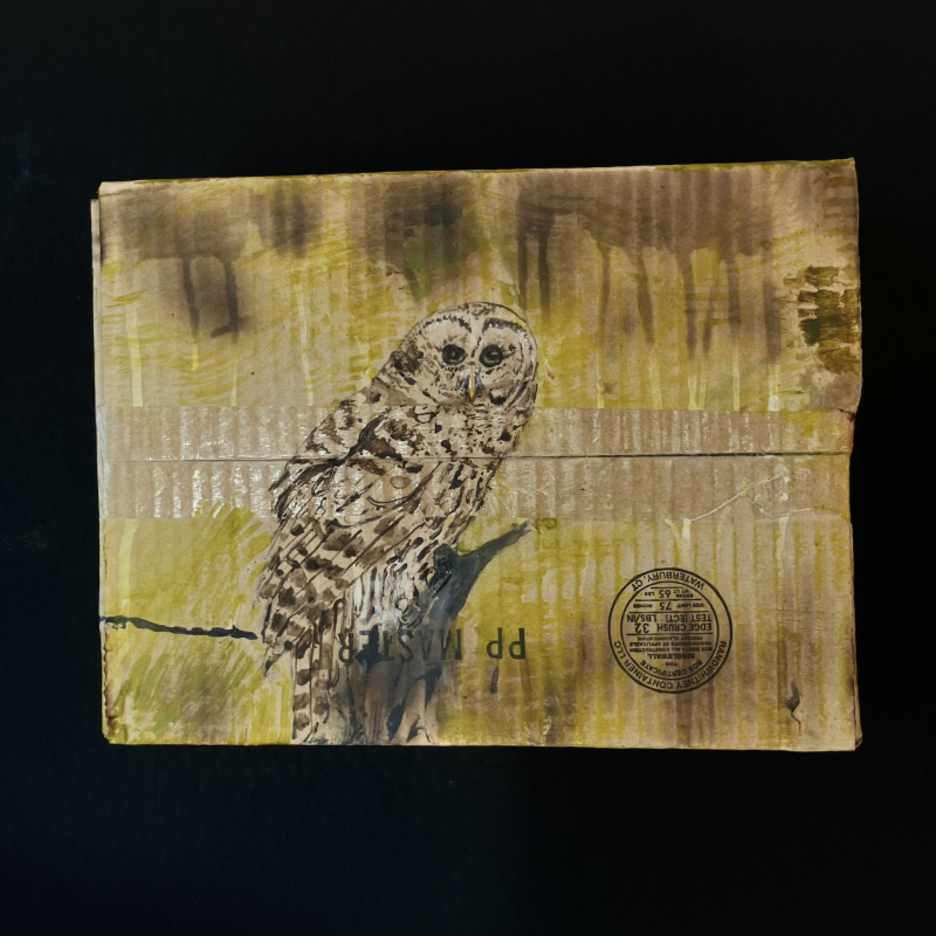
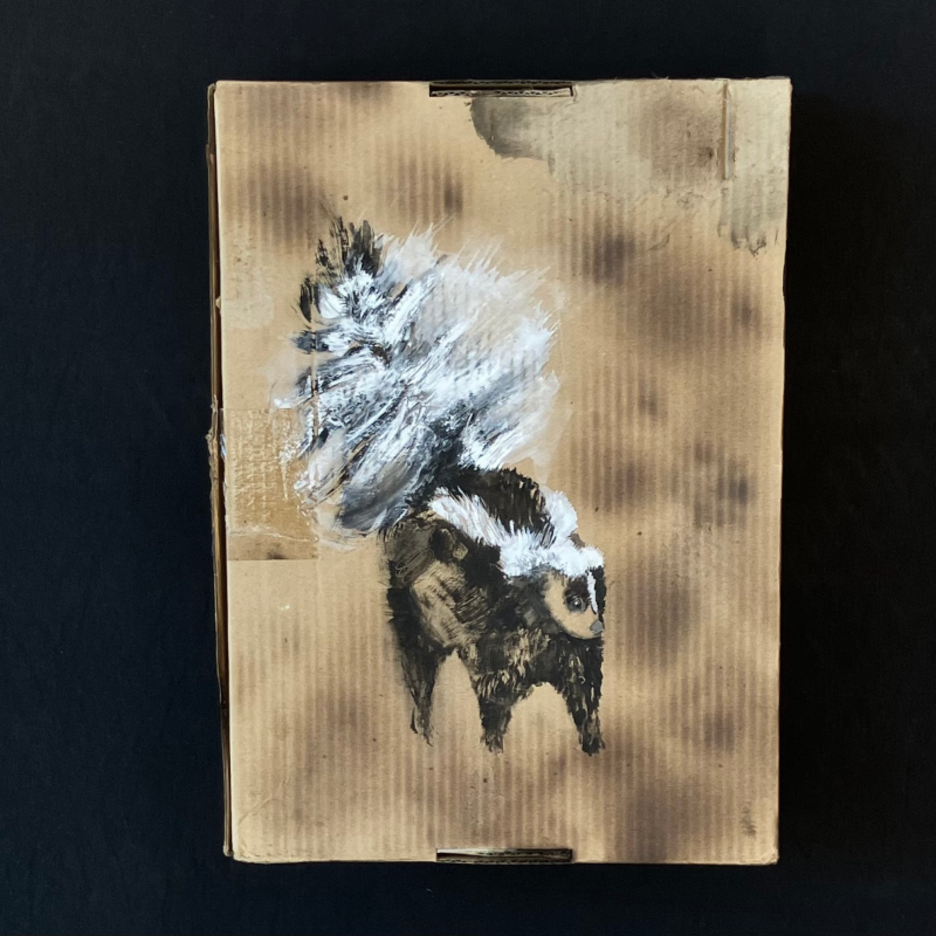
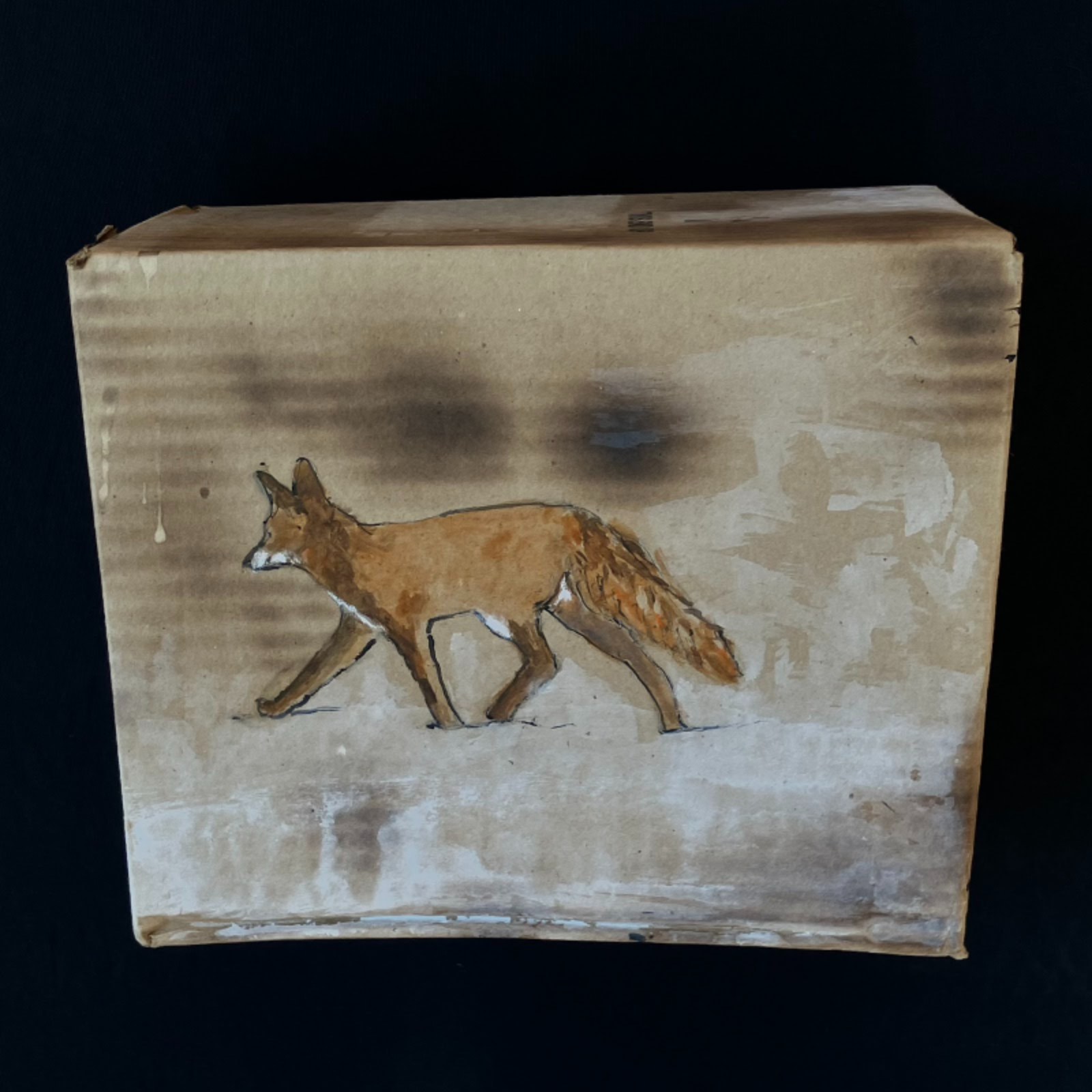
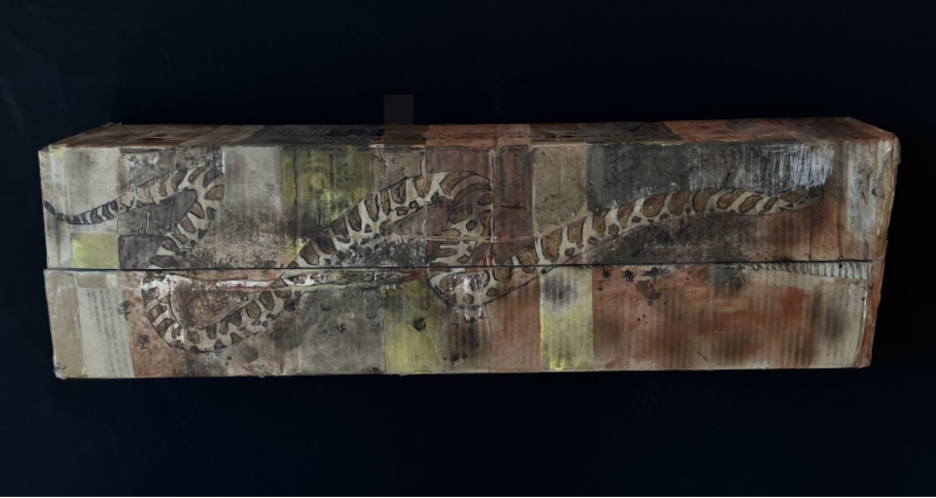
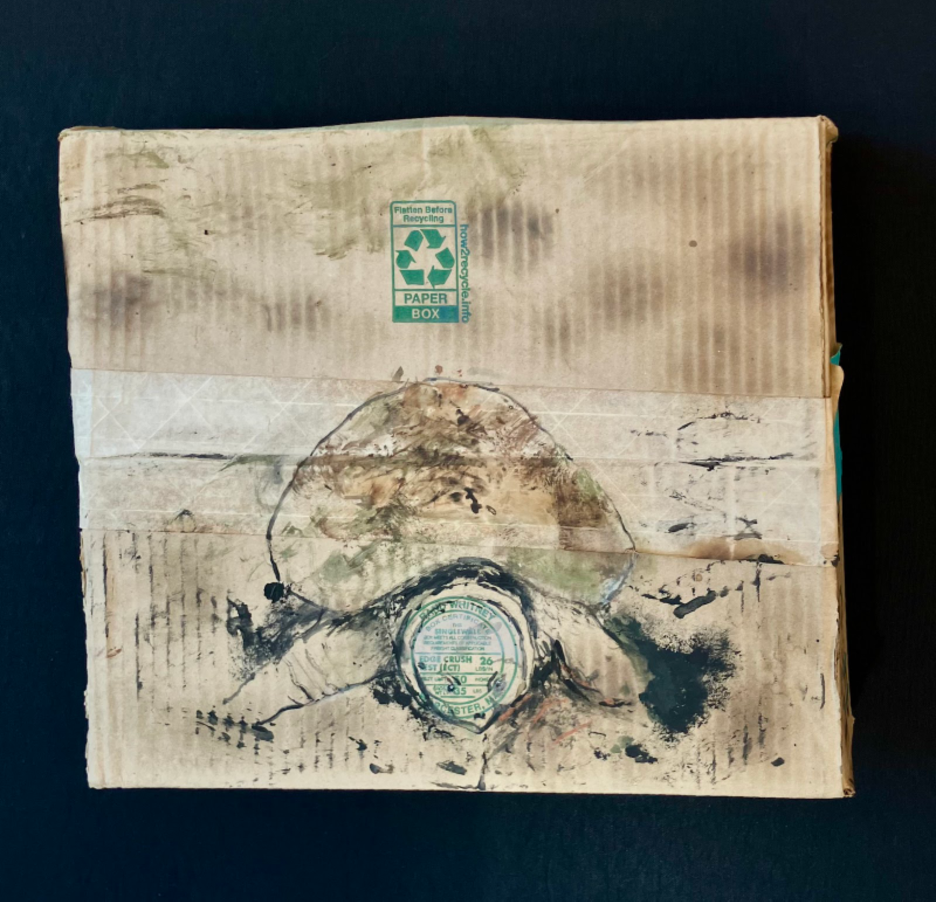
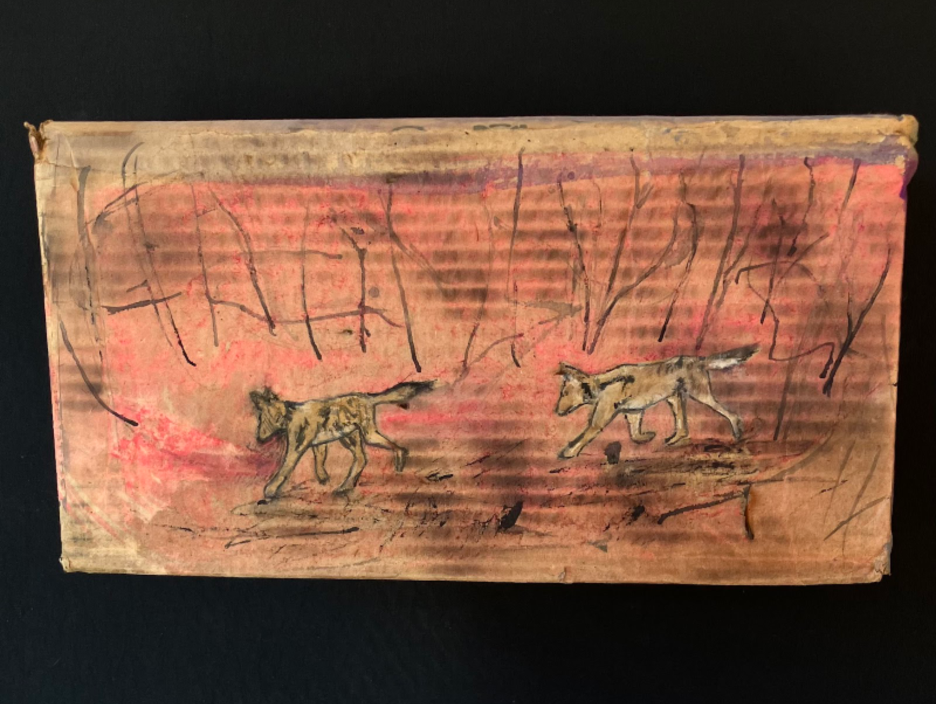
Left to right, top to bottom:
Opossum. 2024. Acrylic paint, olive oil, scorching on cardboard box. 7" high x 7.25" wide x 7” deep | American Red Fox. 2025. Acrylic paint, scorching on cardboard box. 8 high" x 10" wide x 7" deep | Wooly Bear Caterpillar. 2025. Acrylic paint, scorching on cardboard box. 3" high x 9" wide x 2" deep | Milk Snake. 2025. Acrylic paint, scorching on cardboard box. 8" high x 29" wide x 6" deep | Bobcat. 2024. Acrylic paint, scorching on cardboard box. 6" high x 7.5" wide x 5" deep | Black Bear. 2024. Acrylic paint, bleach, blueberry juice, scorching on cardboard box. 10" high x 15" wide x 10" deep | Barred Owl. 2025. Acrylic paint, scorching on cardboard box. 9.5" high x 12.5" wide x 7" deep | Snapping turtle. 2025. Acrylic paint, scorching on cardboard box. 11" high x 13" wide x 4" deep | Coyotes Running Through Burning Woods. 2024. Acrylic paint, olive oil, scorching on cardboard box. 8" high x 15.5" wide x 6" deep.
Future Bird Decendants
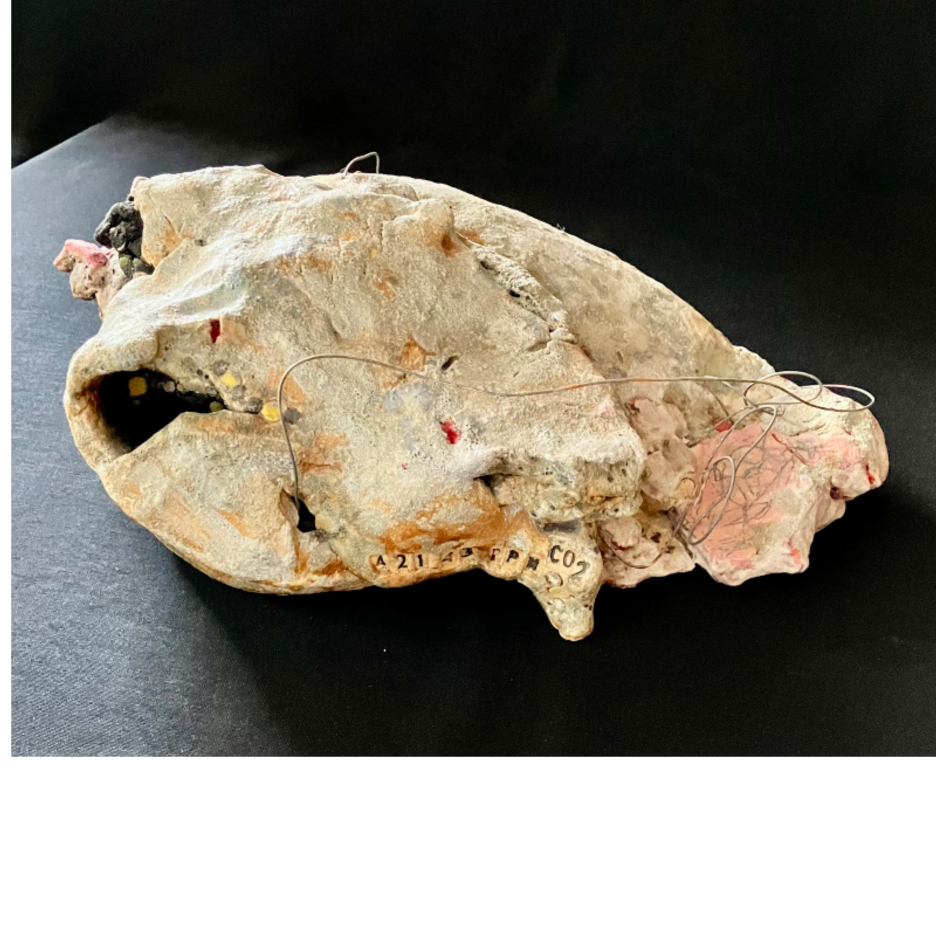
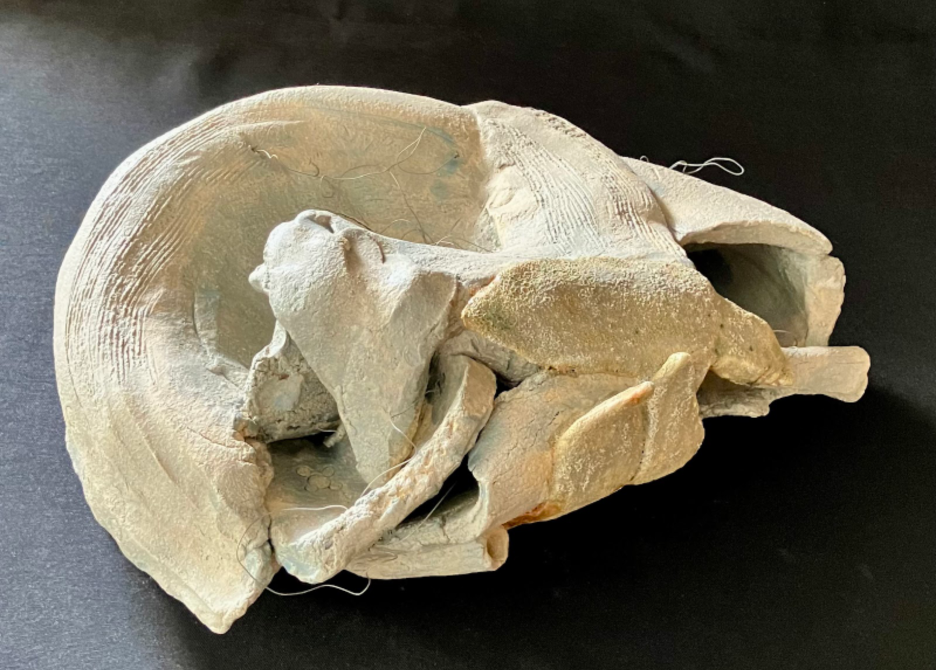
Mindful that evolution will likely go on with or without humans, Dodds creates “future bird descendants,” each imprinted with a daily CO2 global mean and date.
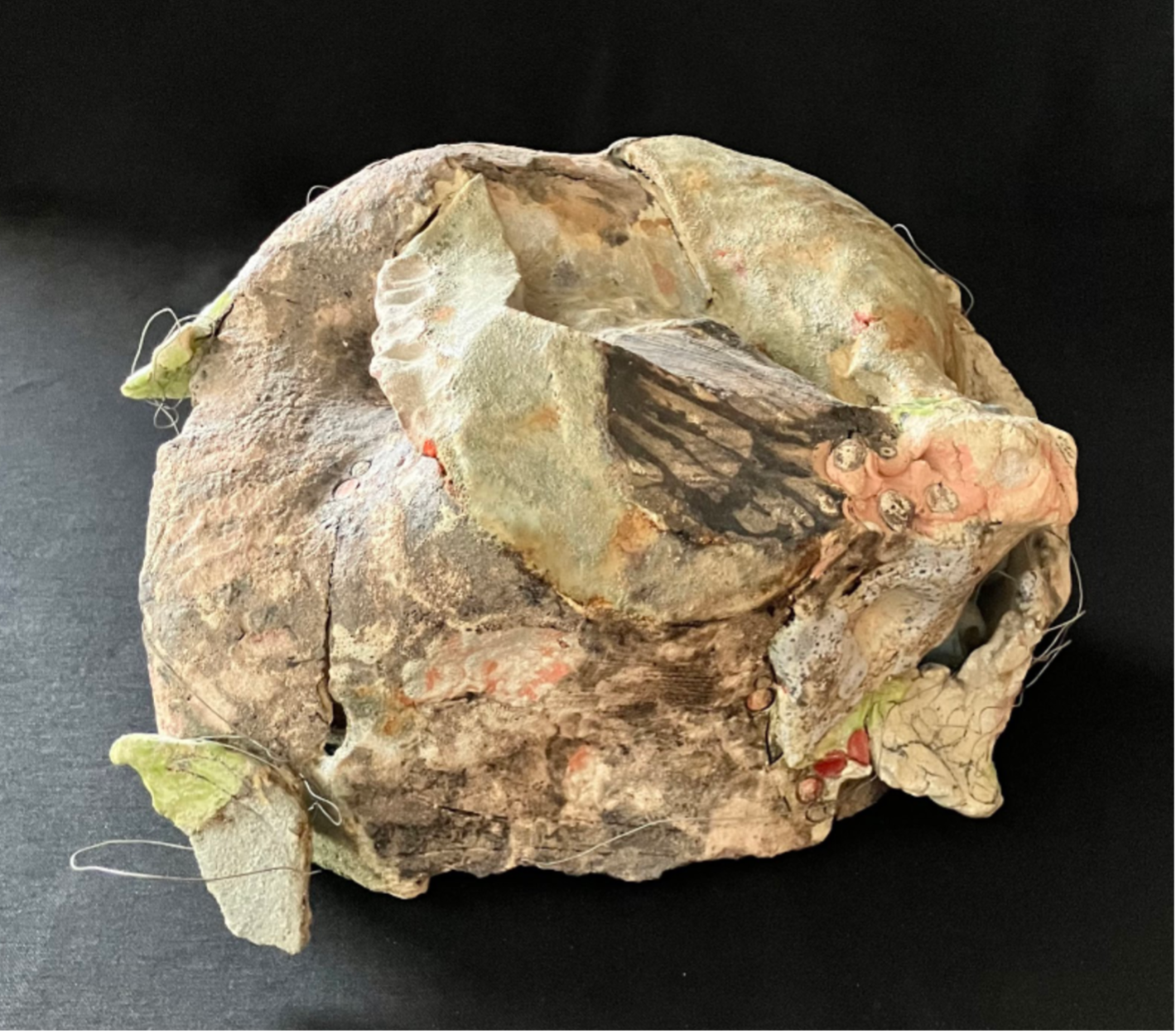
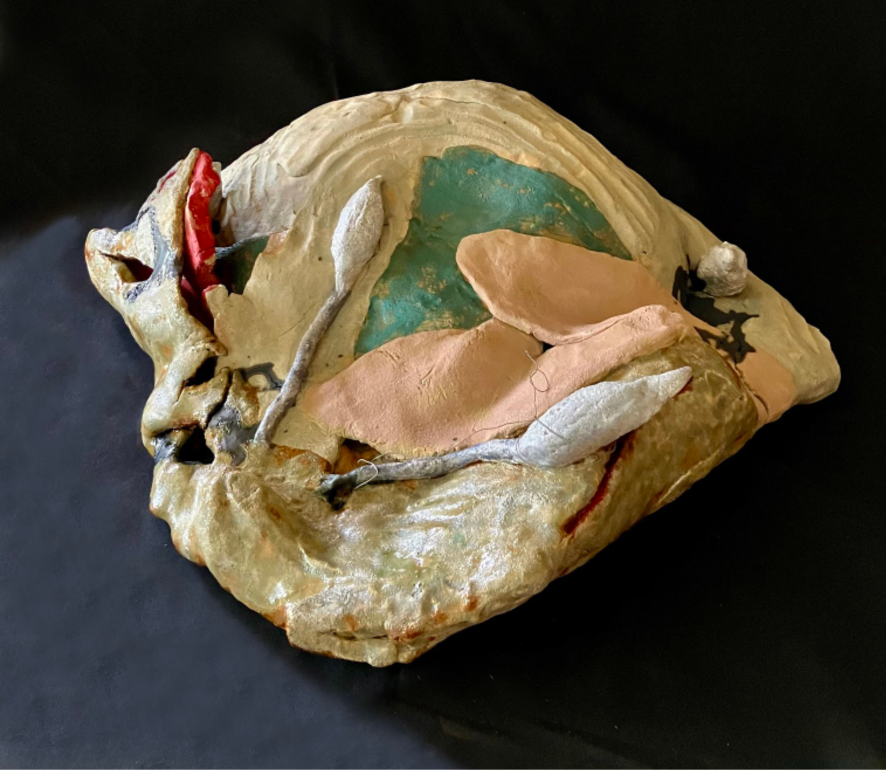
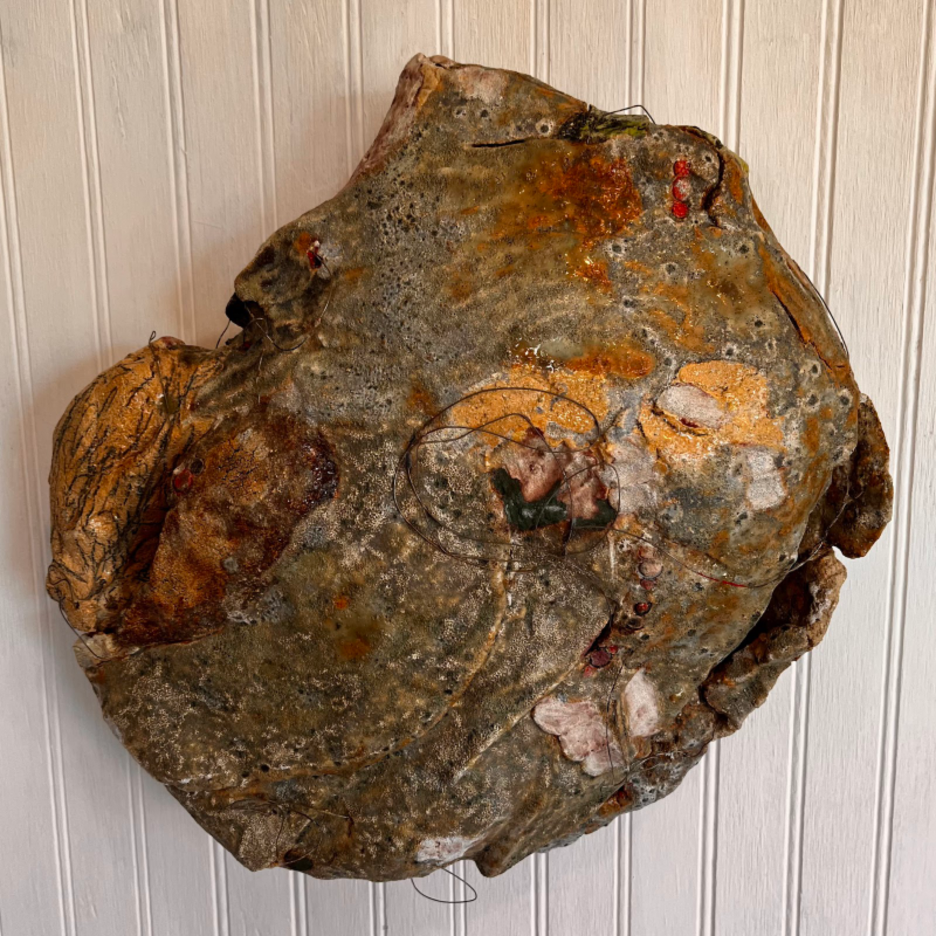
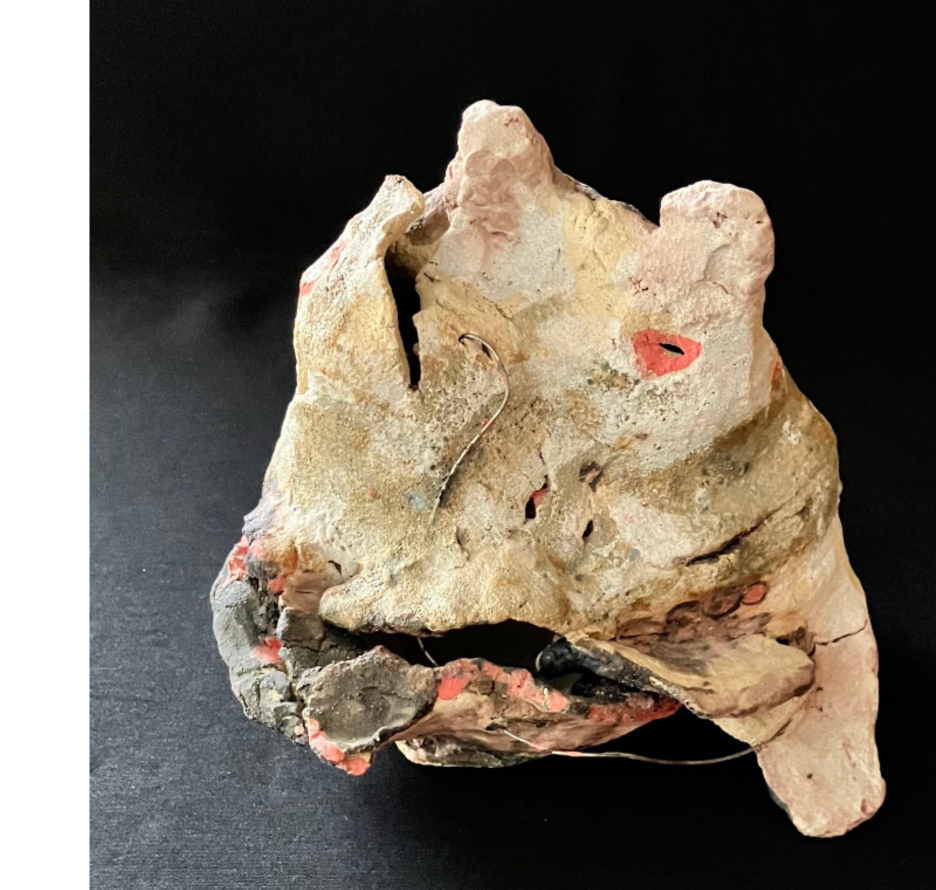
Right: Future Bird Descendant: 420.61 ppm CO2 on 11/21/23. 2023-24. Sculpture clay, nichrome wire. 11.5" high x 12" long x 8.5" wide
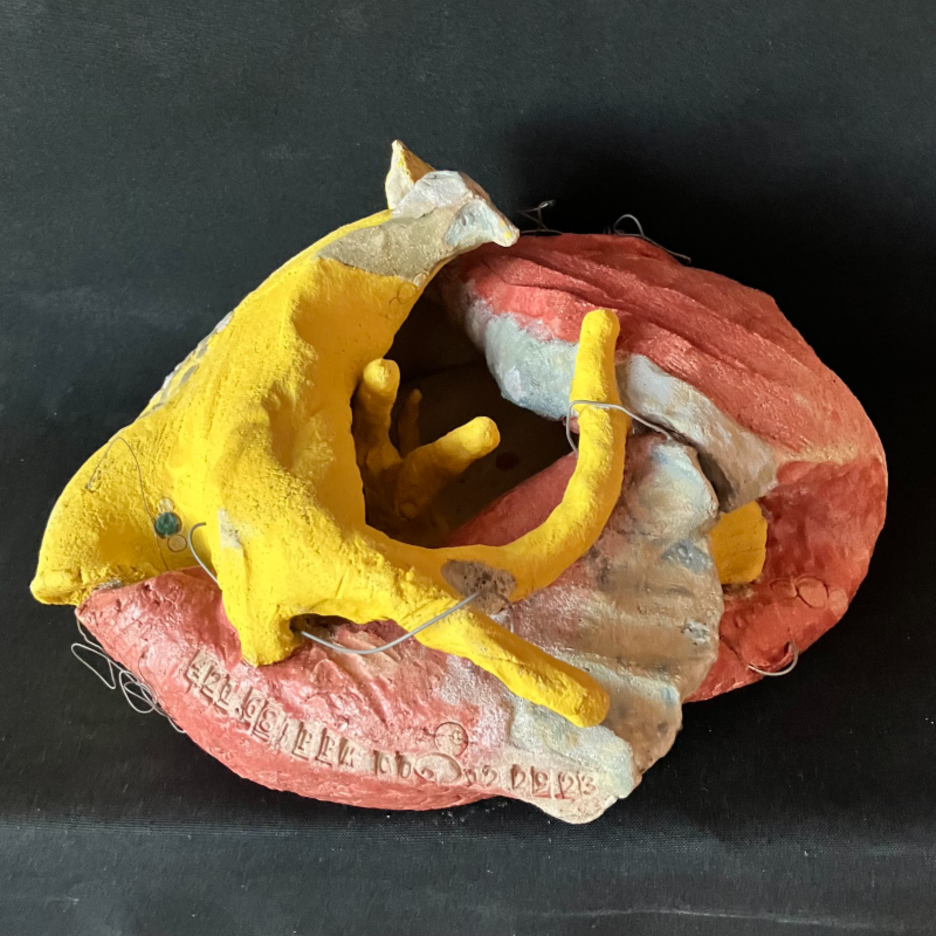
Left: to right, top to bottom
Future Bird Descendant: 422.68 ppm on 5/29/23. 2023 & 2025. Sculpture clay, nichrome wire. 6" high x 13" long x 13" wide. | Future Bird Descendant: 422.43 ppm CO2 on 11/17/23. 2023-24. Stoneware, nichrome wire. 9.5" high x 9 long "x 6" wide. | Future Bird Descendant: 421.23 ppm CO2 on 7/30/23. 2023-24. Sculpture clay, nichrome wire. 5" high x 17"x long 11" wide. | Future Bird Descendant: 420.61 ppm CO2 on 11/21/23. 2023-24. Sculpture clay, nichrome wire. 7" high x 12" long x 12" wide. | Future Bird Descendant: 421.47ppm CO2 on 8/1/23. 2023-24. Stoneware, nichrome wire. 13" high x 13" long x 4" wide. | Future Bird Descendant: 422.86 ppm CO2 on 1/6/24. 2024. Sculpture clay, nichrome wire. 6" high x 14" long x 12" wide. | Future Bird Descendant: 430.5 ppm CO2 avg. May 2025. 2025. Sculpture clay, nichrome wire. 8" high x 22" long x 20" wide. | Future Bird Descendant: 419.19 ppm CO2 on 8/17/23. 2023. Sculpture clay, nichrome wire. 8" high x 8" long x 9" wide. | Future Bird Descendant: 419.42 ppm CO2 on 11/13/23. 2023-24. Stoneware. 12" high x 12" long x 5" wide.
Nests and a monument
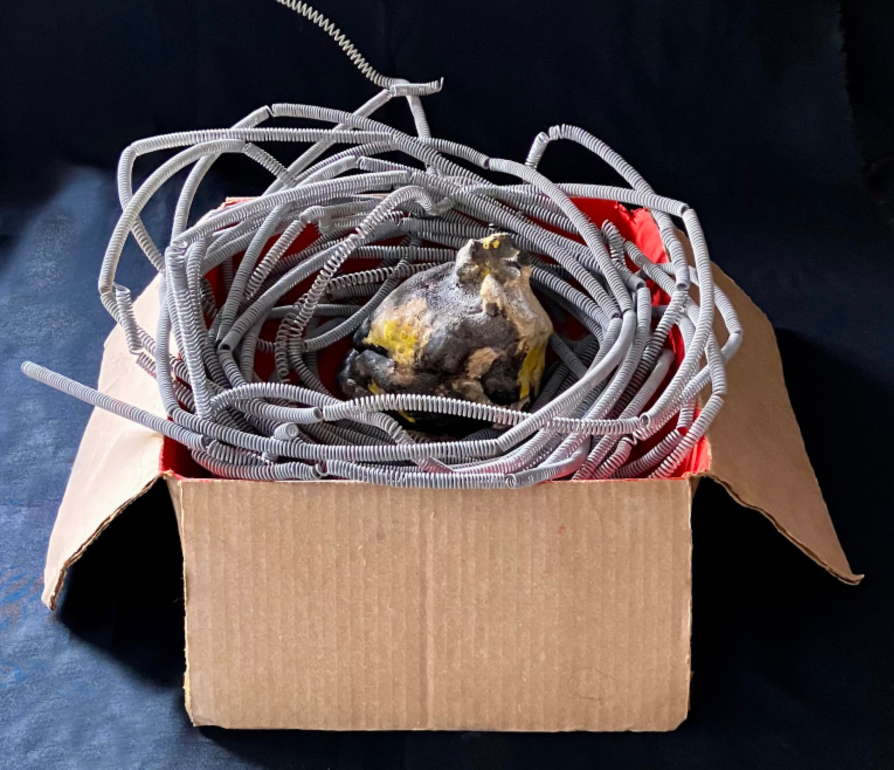
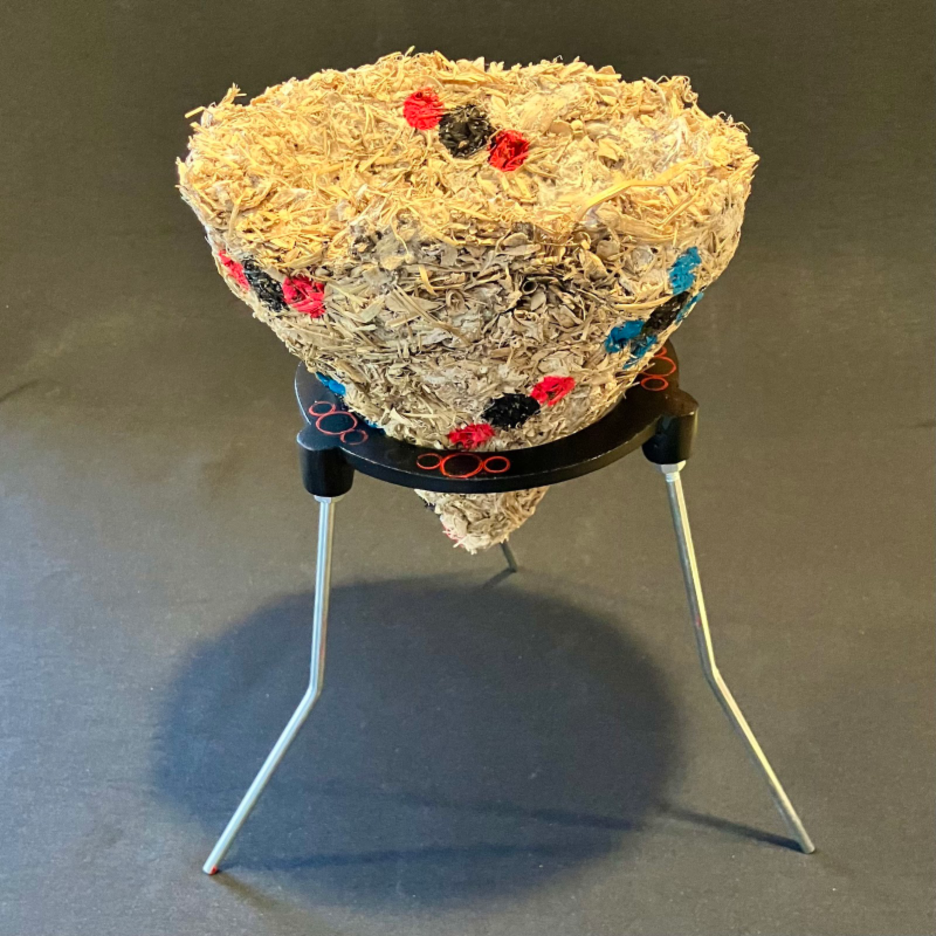
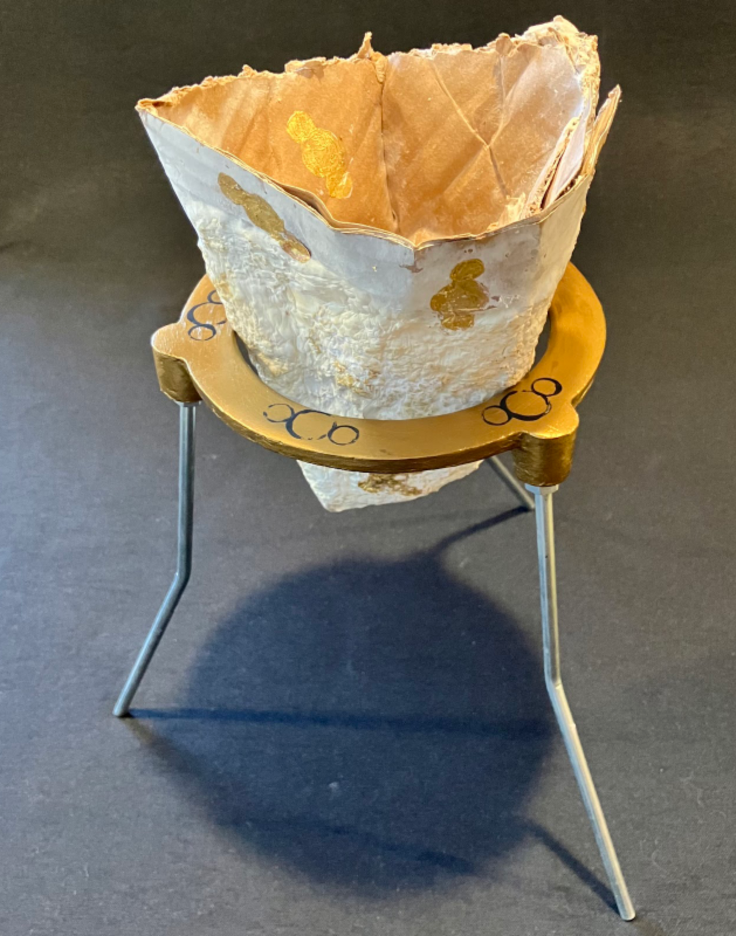
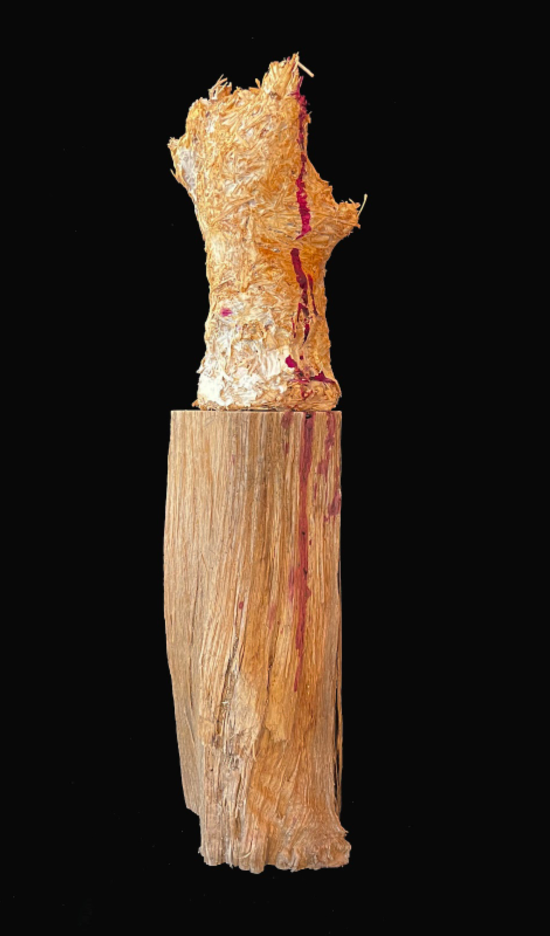
Affordable Nest, Heat Included. 2022 & 2025. White stoneware, salvaged kiln elements, cardboard box, acrylic paint. 7" high x 8" wide x 8" deep. | Bunsen Burning Nest #1. 2025. Myceliated substrate, cardboard, acrylic paint. 12" high x 10" wide x 10” deep. | Bunsen Burning Nest #2. 2025. Myceliated substrate, cardboard, gold leaf. 12" high x 10" wide x 10” deep. | Monument to the Future Post-Digital Era, study model. 2025. Myceliated substrate, pokeberry juice, firewood. 16" high x 4" wide x 4" deep.
Mycelium landscapes
In Not our are recent exploratory works that Dodds created from a living material, mycelium. Mycelium is a branching mass of interconnected threads that absorbs nutrients and water for a fungus. It is low-impact, biodegradable, and carbon-storing, and can be grown from “waste materials,” such as coffee grounds and sawdust. Dodds grows, forms, and ultimately stops mycelium from growing when her artwork is complete.
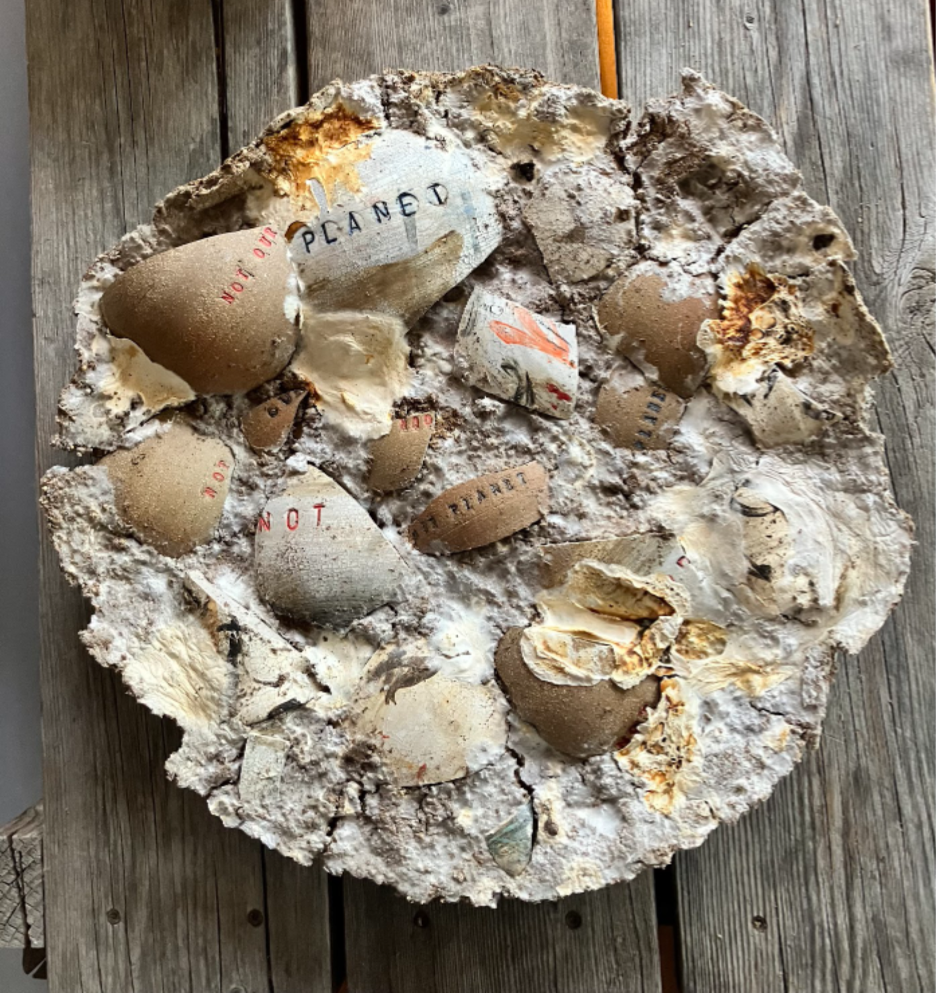
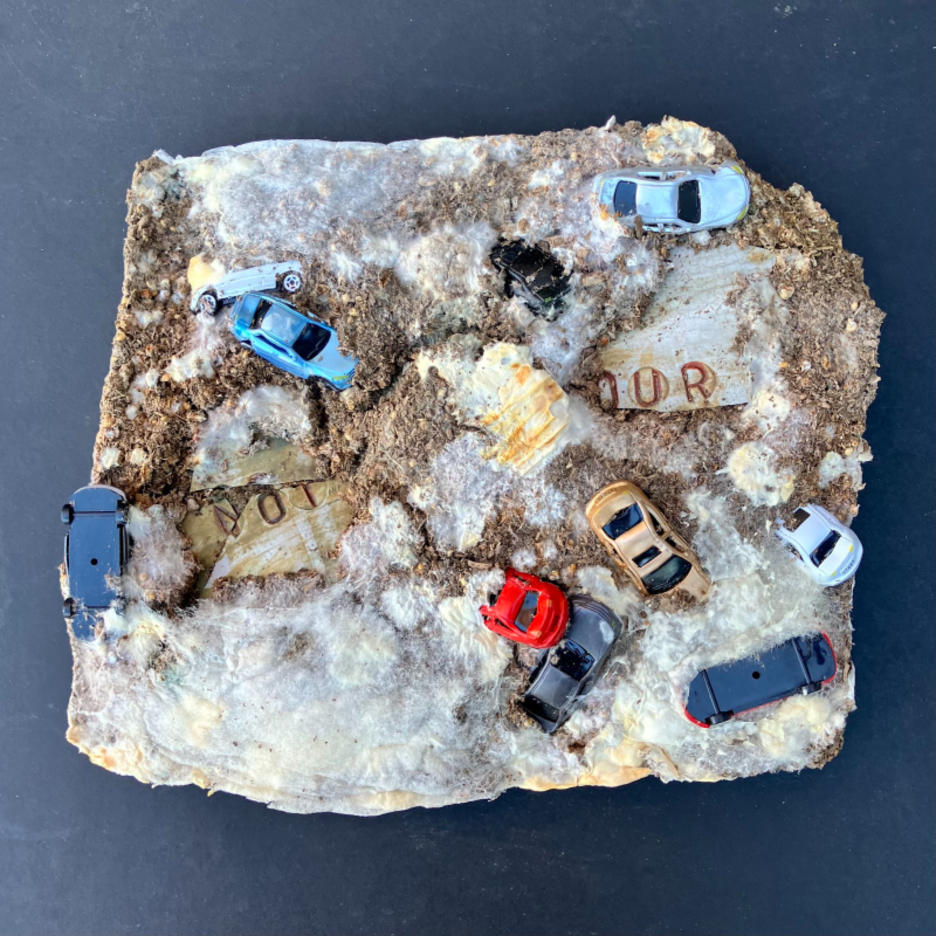
Not our Landscape #1. 2025. Myceliated substrate, ceramic shards, gold leaf 2.5" high x 18" diameter. | Not our Landscape #2 2025. Myceliated substrate, ceramic shards, plastic cars. 1.5" high x 9" long x 7” wide.